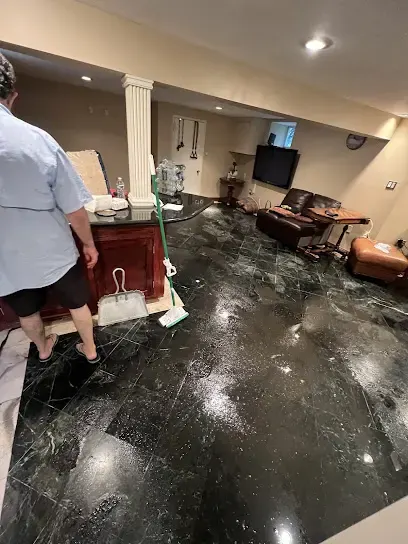
Astoria is mostly rented apartments and attached homes, and its homeownership rate was 18.5% in 2024, against 32.7% citywide. When water floods a rental here, the question is rarely only how to dry it. It is also who calls whom, whose unit the water came from and whose floor it reached.
Key takeaways
- A tenant's first jobs are to stop what can safely be stopped, tell the landlord or building manager in writing, and document the damage.
- The owner arranges repairs to the building and its shared pipes. A tenant's own belongings and policy are a separate matter.
- Water crosses unit lines through ceilings, walls and floors, so extraction often happens in more than one apartment.
- Find the source before drying starts. A leak that is still running undoes the work.
- Keep dates, photographs and messages. They matter for a landlord, a neighbor and an insurance file alike.
Why a rental flood in Astoria involves more than one household
In an apartment building, the floor of one unit is the ceiling of the next. Pipes, risers and drains run through shared walls, so a failure in one place shows up somewhere else.
Astoria's apartment buildings and attached homes mean upstairs leaks often reach ceilings below. Structural drying then often involves shared walls.
- The unit with the visible damage is not always the unit with the leak.
- A leak inside a wall may serve several apartments.
- A drain or sewer problem can reach every unit on the lowest level.
What a tenant does in the first hour
Safety comes first, then the record. A tenant does not need to diagnose the leak, only to limit harm and report it.
These steps fit most rental floods.
- Stop the water if it is safe, such as closing the valve under a sink or toilet.
- Switch off power only if the panel is dry and reachable. If water is near outlets or lights, stay back.
- Move furniture and electronics away from wet areas, without wading through standing water.
- Photograph and film the water, the ceiling, the floor and anything damaged before moving it.
- Tell the landlord or building manager right away, in writing, with the date and time.
- Knock on the neighbor's door above or below, and note whether their unit is wet too.
What the owner arranges
The building owner or manager controls the building's pipes, roof and shared systems. Repairing the source, shutting off a riser and calling a plumber are usually theirs to arrange.
A restoration crew can work with the owner, the manager or the tenant, but someone has to give access to every affected unit. Delay in opening a neighbor's apartment is a common reason water keeps spreading.
Questions worth asking the owner
- Where is the leak coming from, and has it been stopped?
- Who is arranging extraction and drying, and in which units?
- Does the building carry a policy that covers the damage to walls and ceilings?
- When will the unit above or below be opened for inspection?
What a tenant keeps in their own file
A tenant's belongings are generally covered, if at all, by the tenant's own policy. Keep a list of damaged items with photographs and approximate values, and keep every message with the landlord.
How extraction crosses unit lines
Water moves down through floors and sideways along joists. It can end up in a ceiling two floors from where it started.
The crew follows it with moisture meters rather than guessing, and extraction happens in each wet unit.
The unit where the water started
Standing water is pulled from the floor first. The crew checks the source area, the walls and the subfloor for moisture.
The unit below
A wet ceiling can sag with trapped water. It is opened safely, drained and dried, and the framing above it is checked for moisture.
The walls between
Shared walls can carry moisture sideways. They are opened only where readings point, which keeps repairs smaller.
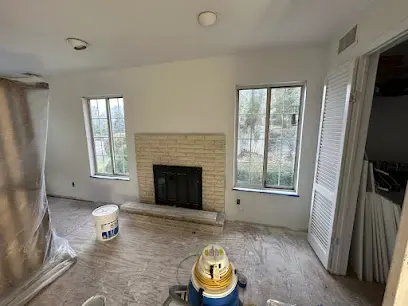
Astoria Heights and the one and two-family contrast
Not every Astoria address is an apartment building. Astoria Heights is mostly one- and two-family private homes, and it gets its mail from the East Elmhurst ZIP 11370.
In a two-family home the owner often lives in one unit and rents the other, which shortens the chain of calls. The tenant tells the owner downstairs or upstairs, and the owner can approve access on the spot.
In a larger building, the manager, the owner and several tenants may all have a part in the decision.
When the water came from the sewer side
After Hurricane Ida remnants hit on September 1, 2021, northwest Queens residents filed 229 complaints to 311 in a week. Of the 229 complaints in Astoria and Long Island City, 126 were sewer backups, and the largest cluster was in Ditmars Steinway.
Water that comes up through a floor drain or toilet is Category 3 and is handled as contaminated from the start. DEP says the owner must maintain the sewer service pipe from the building to the main in the street, and DEP inspects a reported backup within six hours of the 311 complaint.
- Report a backup to 311 and record the report number.
- Claims against the City go to the NYC Comptroller within 90 days.
- Keep out of the room and keep fans off, so contamination does not spread.
Getting the right crew in the right units
The restoration team documents readings in each affected unit, which gives the owner, the tenants and any insurer one shared record. For the process, see water extraction and ceiling leak water damage.
The Astoria service page lists every service, and the main water extraction page explains the method in full.
Questions
Who should a tenant call first after a flood?
The landlord or building manager, in writing, as soon as the water is stopped or reported. A restoration crew can be called in parallel, but the owner controls access to the building and its shared pipes.
Does the landlord's policy cover a tenant's belongings?
Usually not. A building policy is aimed at the structure, and a tenant's belongings are generally covered by the tenant's own policy, if there is one. Read the policy or ask the insurer.
What if the leak started in a neighbor's apartment?
Tell the landlord and note the date, the source and the damage. Photographs and messages help whoever sorts out responsibility later. Restoration can start while that is settled.
Can a crew dry only my apartment?
It can, but water that crossed unit lines may be in other apartments too. Moisture readings show where it went, and drying one unit while another stays wet can leave moisture behind.
What if water came up through a floor drain?
Treat it as sewage. Keep out of the room, report it to 311 and let a crew in protective gear handle the removal.