Structural Drying and Dehumidification in East Elmhurst, NY
Surfaces dry in a day; the structure behind them does not. The drying team sets air movers and LGR or desiccant dehumidifiers to the class of loss and keeps them running until brick, plaster and wood read dry.
(888) 527-9860Start drying the structure now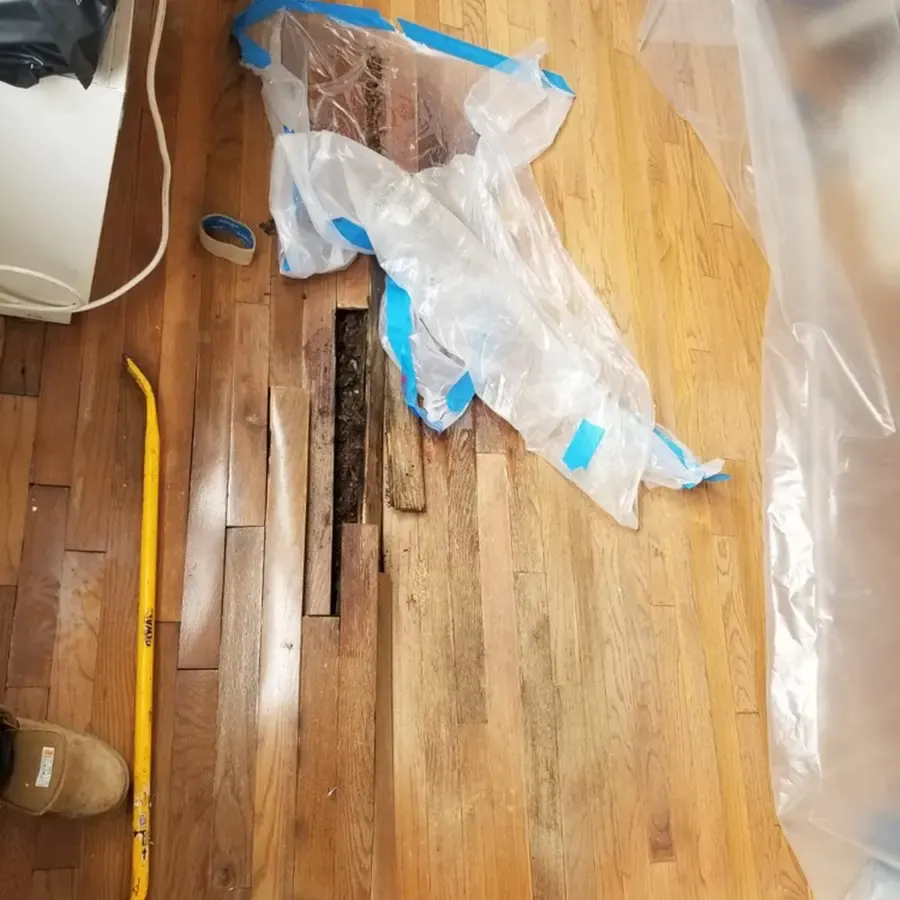
Structural drying is the part of a water loss you cannot see working. It is also the part that decides whether stains come back, floors cup or mold grows behind a wall months later. East Elmhurst houses lean on dense materials, brick party walls, plaster and hardwood, which hold water longer than newer construction.
- Moisture mapping comes before any equipment goes down.
- The water category and the class of loss set what is removed and what is dried.
- Equipment stays until readings sit within 2 to 4 points of a dry reference.
What does structural drying and dehumidification cost in East Elmhurst, NY?
In East Elmhurst, NY, structural drying typically runs $1,500 to $25,000, depending on the class of loss, the number of rooms and floors, dense materials like brick and plaster, and how many days of equipment the readings call for.
One or two rooms, Class 1 or 2
- Air movers and LGR
- Daily readings
- Drying log
Floor or basement, Class 3
- More equipment
- Cavity drying
- Hardwood mats
Class 4 or multi-floor
- Desiccant dehumidifiers
- Brick and plaster drying
- Extended monitoring
Ranges are typical, not a quote: category of water, square footage, material class and how fast drying started move the number most. Run the East Elmhurst water damage cost calculator for a closer range.
How structural drying and dehumidification is handled in East Elmhurst
The tech who does the walkthrough maps moisture before any equipment goes down, so the drying plan matches what is actually wet. Equipment stays until the readings say dry, not until it looks dry.
- 1
Moisture map
Meters and thermal imaging set the wet boundaries and the class of loss.
- 2
Equipment set
Air movers and dehumidifiers are placed for each room's load.
- 3
Daily readings
Psychrometric and material readings are logged every day.
- 4
Dry verified
Equipment comes out when readings match the dry reference.
How the drying plan is set
The tech who does the walkthrough maps moisture with pinless and pin meters and thermal imaging, then classifies the loss. Class 1 through 4 sets how much equipment a room needs: Class 4 means dense materials such as brick, plaster or hardwood are soaked and need specialty drying.
- Air movers set to each room's evaporation load.
- LGR dehumidifiers for most losses; desiccants for cool basements and Class 4 materials.
- Floor drying mats and cavity drying for hardwood and walls.
Readings decide when it is done
Each day the drying team records temperature, humidity and material readings, the psychrometric log that goes in the claim file. Equipment comes out when wet materials read within 2 to 4 points of a dry reference material in an unaffected part of the same building, not after a fixed number of days.
- A dry reference taken in an unaffected room.
- Daily readings at marked points on walls and floors.
- Equipment adjusted as materials dry, not left on autopilot.
Why surface-dry is not dry
Paint and the face of drywall dry quickly, while the bottom plate, the subfloor and the back of plaster stay wet. Closing up or painting too early traps that water. The EPA explains why moisture must be dried within 24 to 48 hours, and OSHA covers safe work in water-damaged buildings.
Drying follows water extraction; see the drying time estimator for a typical timeline.
Structural drying and dehumidification across East Elmhurst and northern Queens
The East Elmhurst restoration crew covers ZIP 11369 and 11370, from Ditmars Boulevard and the Flushing Bay Promenade down through Astoria Boulevard, 94th Street and North Corona.
Nearby coverage reaches Jackson Heights, Corona, Flushing, College Point, Astoria.
See every East Elmhurst street area and nearby neighborhood covered
Related water damage services in East Elmhurst
Structural Drying and Dehumidification questions in East Elmhurst, NY
What is the IICRC S500?
It is the industry standard for professional water damage restoration, covering moisture mapping, water categories, classes of loss, equipment and the drying goal.
Why are the dehumidifiers so important?
Air movers lift water out of materials into the air. Dehumidifiers pull it out of the air. Without them the room just gets humid.
What is a desiccant dehumidifier?
A dehumidifier that pulls water with a drying material instead of a cold coil. It works well in cool basements and on dense Class 4 materials.
Can I turn the equipment off at night?
It is best not to. Drying stalls when equipment stops, and the job runs longer.
How long does structural drying take?
Three to seven days is common. Brick, plaster and hardwood can take longer.
What is a dry reference?
A reading from the same kind of material in an unaffected part of the building. The goal is to bring wet materials within 2 to 4 points of it.
Wet walls and floors in East Elmhurst? Get them dried to a reading.
The drying team sets air movers and dehumidifiers to the class of loss and logs readings every day until the goal is met.