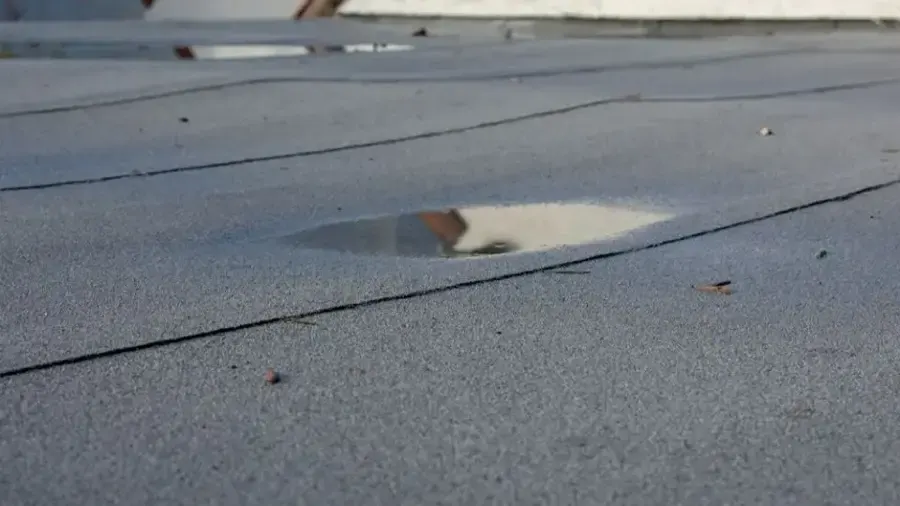
Many East Elmhurst homes are attached brick row houses built from the 1920s through the 1950s, and most carry a flat roof edged by a parapet. When a summer cloudburst or a nor'easter pushes water through that roof, the first sign is usually a stain on the top-floor ceiling.
Key takeaways
- A stain that appears during or right after rain points to the roof or parapet. A stain that appears in dry weather points more to a pipe.
- A sagging or bulging ceiling can hold a lot of water. Stay out from under it and keep people away.
- Water on a flat roof pools instead of running off, so one small opening can let a lot through.
- Do not go onto a wet roof to look for the leak. Photograph from inside and call for help.
- The ceiling and the framing above it are dried in place once the water is stopped from coming in.
Why flat roofs and parapets leak in Queens
A flat roof is not truly flat. It slopes slightly toward a drain, and the edges are finished with a parapet wall and a metal cap called flashing.
Water meets many seams here, including the cap, the roof edge, the drain and the wall where the roof stops. Each seam can open as the building ages and the weather works on it.
- Summer cloudbursts put a lot of water on the roof in a short time.
- Nor'easters drive rain sideways against parapet walls.
- Winter freeze snaps can open cracks in the cap and mortar, and the next rain finds them.
Telling a roof leak from a pipe
On a top floor, both a roof and a pipe can stain a ceiling. The pattern gives clues, and the first steps differ.
A few simple checks narrow it down.
Signs that point to the roof
- The stain shows up during rain or soon after.
- It sits near an outside wall, the roof drain or the parapet.
- It dries out in dry weather, then returns with the next storm.
Signs that point to a pipe
- The stain grows in dry weather.
- It sits below a bathroom, a kitchen or a heating pipe.
- The water seems to arrive on a schedule, such as when someone uses a fixture.
What stays unsafe
A wet ceiling is heavy. Plaster and insulation can hold water above the surface and drop it all at once.
Treat these as unsafe until a crew has looked.
- A ceiling that sags, bulges or drips from a crack.
- Light fixtures, fans or outlets in or near the wet area. Keep the circuit off if it is safe to reach the panel.
- The roof itself during or after rain. Wet roofing is slippery and a parapet edge is a fall risk.
- Any room where water is coming through an electrical box.
The first steps from inside
Most of the first steps happen inside the house. The aim is to limit damage and record it.
- Move furniture, bedding and electronics out from under the stain.
- Place a bucket under any drip, and put a plastic sheet over what cannot move.
- Photograph the stain, the ceiling and the date, and photograph it again as it grows.
- If a ceiling bulges, a small hole at its lowest point can let water drain into a bucket. Do this only if it is safe to stand clear, and otherwise leave it for a crew.
- Note the weather when the leak began, which helps tell roof from pipe.
How the ceiling and framing get dried
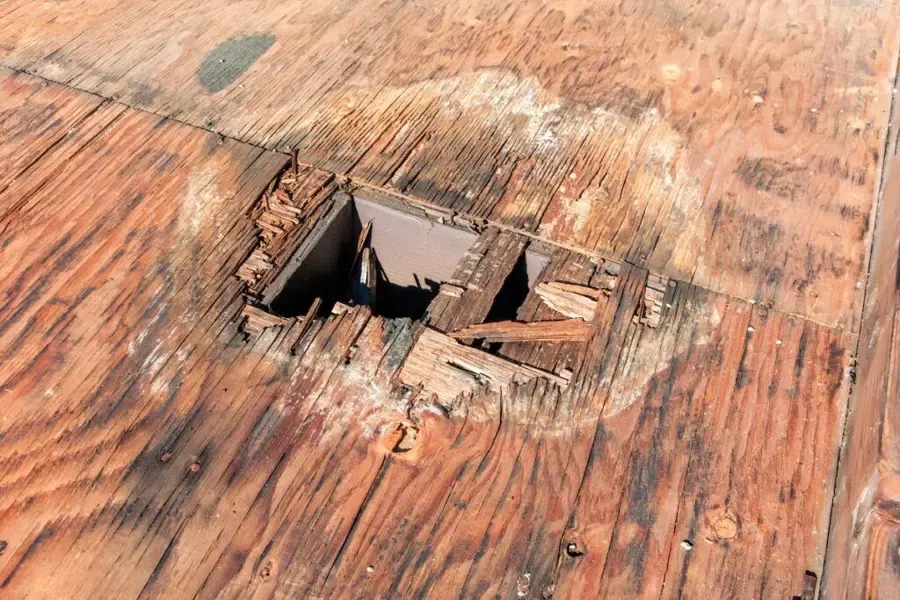
Drying starts after the water is stopped. A roofer repairs the opening, and the restoration team dries what the water reached.
Moisture readings show how far the damage went, so only the wet sections are opened.
Opening the ceiling
The wet plaster or drywall is opened safely, which also lets trapped water drain. The insulation above it is checked, and wet insulation usually comes out.
Drying the framing
The joists and roof deck framing are dried in place with controlled airflow and dehumidification. Readings are repeated until the wood is back to a normal level.
The ceiling leak page covers how this works from the room below.
Storms, repeat leaks and records
Hurricane Ida remnants flooded basement apartments across Queens on September 1, 2021, and the September 29, 2023 downpour flooded basements and subway stations across the city. Storms like those also test roofs, and a leak that shows in the top floor often follows the same weather.
Keep photographs and the date of each storm. A pattern of repeat leaks after rain helps a roofer find the weak seam, and it helps an insurance file.
- Write down the date and weather of each leak.
- Keep every estimate and receipt.
- Ask the roofer to check the cap, the flashing and the drain, not only the stained spot.
Looking after the roof between storms
A flat roof gives less warning than a pitched one, so a little regular attention goes a long way. Most of it is looking, not climbing.
A roofer can do the close inspection, but an owner can notice the early signs from a window or the stairs.
- Look for water that stays on the roof long after rain, which points to a blocked drain.
- Check the top-floor ceiling after each heavy storm.
- Notice cracks or loose mortar along the parapet from the street.
- Keep drains and scuppers clear of leaves and debris when it is safe to reach them.
When to call for professional help
A stain that grows, a bulging ceiling or water in more than one room needs a crew. See flat roof leak water damage for the process.
If the rain also brought water into the basement, storm and flash flood cleanup covers that side of the job.
Questions
How do I know if a ceiling leak is the roof or a pipe?
A stain that appears during or after rain, near an outside wall or a roof drain, points to the roof. A stain that grows in dry weather or sits below a bathroom or heating pipe points to a pipe.
Is it safe to pop a bulging ceiling?
Only with care. A bulge can hold a large amount of water and drop plaster with it. If it is safe to stand clear, a small hole at the lowest point lets water drain into a bucket. Otherwise leave it for a crew.
Can I patch a flat roof myself?
Do not go onto a wet roof. A dry-weather patch may slow a leak, but a roofer can find the real source, which is often at a seam, a drain or the parapet cap.
Will the ceiling have to come down?
Only the wet part is opened. Moisture readings decide how much, and sections that dry in place can stay.
Does homeowner insurance cover roof leaks?
It depends on the policy and on whether the damage was sudden or came from wear. Photograph the damage, keep records and ask the insurer before repairs begin.