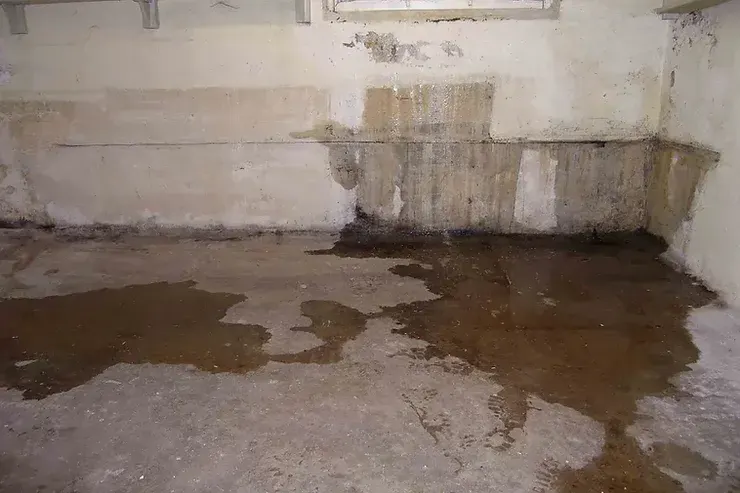
When a downpour hits Queens, the sewers in East Elmhurst carry stormwater and household waste in the same pipe, and the overflow can come up through the lowest drain in the house. A basement floor drain that starts gurgling and then fills the room is a sewage event, not a plain flood.
Key takeaways
- Water from a floor drain, toilet or tub during a storm is treated as Category 3, meaning contaminated, from the first minute.
- Stay out of the room, keep children and pets away, and do not run fans that spread the water into other rooms.
- Report the backup to 311. DEP inspects a reported sewer backup on its own six-hour standard, and claims against the City go to the NYC Comptroller within 90 days.
- The pipe from the building to the main in the street belongs to the property owner, so the cause is not always the city sewer.
- Porous materials that soaked up sewage, such as carpet pad and drywall at the base of the wall, are usually removed rather than dried.
Why East Elmhurst basements take sewage
New York City has a combined sewer system, which carries stormwater and sewage in the same pipe. In a cloudburst the pipe can fill faster than it drains, and the pressure looks for the lowest opening.
In East Elmhurst that opening is often a basement floor drain, a laundry sink or a basement toilet. A large sewer carries stormwater and sewage from East Elmhurst and Jackson Heights to the Bowery Bay plant in Astoria, so a heavy storm across that whole area loads the same pipes at once.
The housing adds to the risk. Many East Elmhurst homes are attached and semi-detached brick row houses and two-family homes built from the 1920s through the 1950s, with finished basements and basement apartments below grade.
- Floor drains sit lower than almost anything else in the building.
- Finished basements hide the first sign, which is often just a smell or a slow gurgle.
- Aging cast iron and clay pipes from the house to the street can crack or fill with roots, which makes a backup more likely even in modest rain.
What the water is, and why it matters
Restoration crews sort water into categories. Clean supply water is Category 1.
Water that came out of a sewer pipe is Category 3, the most contaminated, no matter how clear it looks.
That label changes the whole job. The goal shifts from drying to removing contamination, and anything porous that touched the water is judged on whether it can be cleaned or has to go.
Why it is Category 3 from the start
Sewage water carries bacteria and other contaminants, and it picks up more as it crosses the floor. Waiting does not make it safer.
The category is set by the source, not by color or smell. A backup that looks like gray water is handled as Category 3 all the same.
What to keep out of the water
Do not walk through it barefoot, and do not use a household wet vacuum on it. A wet vacuum blows fine spray into the air and can carry contamination into the rest of the house.
- No children, pets or people with open cuts near the room.
- No tracking boots from the basement up the stairs.
- No household fans pushing air out of the basement.
The first steps before anyone arrives
The first steps are about limiting spread, not cleaning. Most of the cleaning belongs to a crew with the right equipment and protective gear.
- Stop using water in the house. A flushed toilet or a running washer sends more water into the same blocked pipe.
- Switch off power to the basement at the panel only if it is dry and safe to reach. If water is near outlets or the panel, stay away and leave it for a professional.
- Photograph how high the water reached on the walls, the drain and any damaged items before anything moves.
- Move valuables to higher ground only if that does not mean wading through the water.
- Report the backup to 311 so there is a record of the event and an inspection request.
Who inspects, who owns the pipe, and what a claim involves
DEP says the property owner owns and must maintain the sewer service pipe from the building to the city sewer main in the street. A blockage or break inside that stretch is the owner's to fix.
DEP inspects a reported sewer backup within six hours of the 311 complaint. That inspection helps show whether the problem is in the city main or in the pipe on the property.
Claims against the City go to the NYC Comptroller within 90 days, so the date of the backup and the 311 report matter. Photographs and a written list of damaged items support any claim.
- Write down the date, the time the water appeared and the 311 report number.
- Keep receipts for anything done in the first days.
- Ask a plumber to check the property side of the pipe once the water is gone.
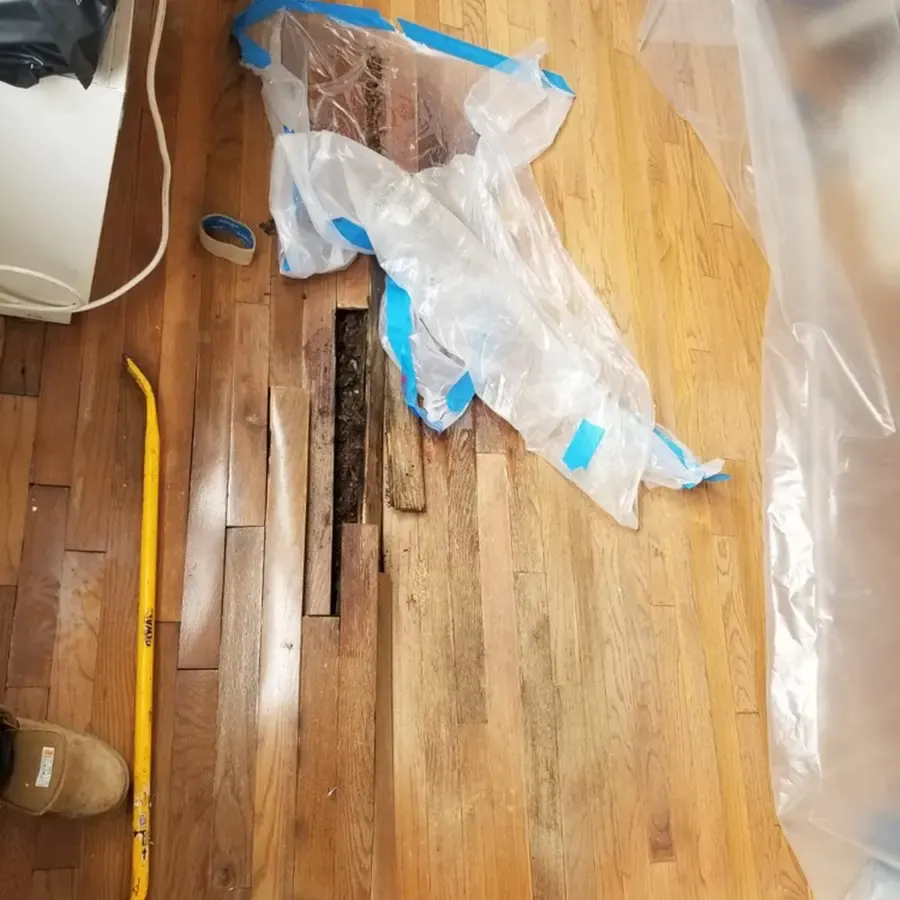
What the crew removes first
Cleanup starts with the contaminated water. Extraction equipment removes standing water from the floor, and the floor drain area gets special attention because that is where the water entered.
After extraction, the crew removes materials that soaked up sewage and cannot be cleaned. Carpet, carpet pad and the bottom of drywall are the usual first casualties in a finished basement.
Materials that usually come out
- Carpet and pad that sat in the water.
- Drywall and insulation that wicked sewage upward.
- Cardboard boxes, upholstery and particleboard furniture.
Surfaces that can often be cleaned
Concrete floors, brick, and sealed hard surfaces are cleaned and treated, then dried. Structural drying follows once the contaminated materials are out, so that moisture left in framing and masonry does not linger.
Protecting the basement from the next storm
The law does not require backflow prevention devices for most NYC homes, but DEP says they can help stop sewage from flowing back in. A plumber can say whether a device fits a particular pipe.
Hurricane Ida remnants set a New York City record of 3.15 inches of rain in one hour on September 1, 2021. DEP says the city sewer system typically handles about 1.75 inches an hour, so a storm that strong will overrun the system whatever a homeowner does.
- Keep basement floor drains clear and do not store items on top of them.
- Ask a plumber whether a backflow device suits the sewer pipe.
- Know where the main water shutoff and the electrical panel are before a storm.
- Try the basement backup risk check for the questions that point to a weak spot.
When to call for professional cleanup
Any sewage backup that covers more than a small patch of floor is a job for trained crews. The restoration team works in protective gear, removes the contaminated water and materials, and documents readings for the insurance file.
For a closer look at the process, see sewer backup cleanup and basement flooding cleanup. Neighbors in Astoria deal with the same combined sewer system.
Questions
Is water from a floor drain always sewage?
During a storm, yes, treat it that way. Water that comes up through a floor drain, toilet or tub from the sewer side is handled as Category 3. A plumber can sort out the source once the water is gone.
Can I clean up a small backup myself?
A small patch on a concrete floor can be handled with protective gloves, boots and a disinfectant made for the job. Anything that reaches carpet, drywall or more than a small area calls for professional cleanup.
Who pays when the sewer backs up into a basement?
It depends on where the blockage is and on the insurance policy. DEP says the owner maintains the sewer pipe to the street, and claims against the City go to the NYC Comptroller within 90 days. Many policies exclude sewer backup unless an endorsement was added.
How long before the basement is usable again?
Extraction and removal of contaminated materials come first, then cleaning and structural drying. The timeline depends on how much was soaked, so ask the restoration team for a drying plan after the readings.
Should I call 311 even if I already called a plumber?
Yes. A 311 report creates a record and asks DEP to inspect, which helps show whether the city main or the pipe on the property is the cause.