Ceiling Leak Water Damage in Corona, NY
In Corona's stacked apartments, the household upstairs and the household below share a leak whether they like it or not. The ceiling crew finds where the water began, removes plaster that is about to give way and dries the cavity behind it.
(888) 527-9860Ceiling dripping? Call Corona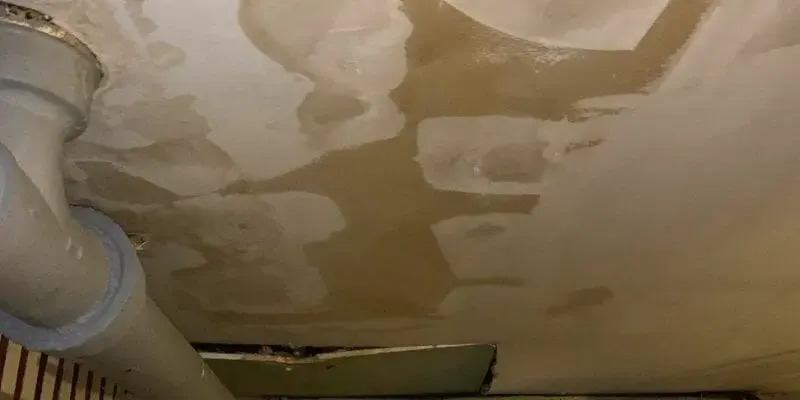
Corona has everything from large cooperatives such as the Dorie Miller Residential Cooperative, with six buildings and 300 apartments, to two-family houses. In every one of them a ceiling is somebody's floor. Upstairs, a tub left running, a toilet seal that has failed or a supply pipe that has split announces itself below as a stain, a bulge or a drip.
- Moisture mapping comes before any equipment goes down.
- The water category and the class of loss set what is removed and what is dried.
- Equipment stays until readings sit within 2 to 4 points of a dry reference.
What does ceiling leak water damage cost in Corona, NY?
A ceiling leak in Corona, NY usually costs $900 to $16,000 to clean up. The size of the wet area, any plaster that has to come down and how far the water moved through floors and walls set the total.
Fresh stain
- Meter survey
- Ceiling dried where it hangs
- Daily meter checks
Sagging section
- Controlled drain and removal
- Joist cavity drying
- Room shielded
Multiple rooms or floors
- Ceiling and wall demolition
- Drying across units
- Records for both claims
Ranges are typical, not a quote: category of water, square footage, material class and how fast drying started move the number most. Run the water damage cost calculator for a closer range.
How ceiling leak water damage is handled in Corona
The tech who does the walkthrough maps moisture before any equipment goes down, so the drying plan matches what is actually wet. Equipment stays until the readings say dry, not until it looks dry.
- 1
Find the start
The crew goes through the floor above and follows the water with infrared imaging.
- 2
Make it safe
Bulging ceilings are drained and the soaked sections are cut out.
- 3
Dry the cavities
Fans and dehumidifiers work on joists, subfloor and wall tops.
- 4
Verify both floors
Meters above and below confirm the drying target.
Reading a ceiling stain
Brown rings, peeling paint and a soft spot each tell the tech something. A ring that keeps growing means water is still arriving, while a dry ring suggests the source is already shut. Following the stain toward the walls often leads to the pipe, fixture or appliance upstairs, and an infrared camera confirms it.
- Growing rings point to active water.
- Soft or bulging drywall points to trapped water.
- Stains running along a wall often track a pipe.
Making a wet ceiling safe
Plaster soaked through can drop in sheets, so the first job is protecting the room below. Trapped water is drained through a small controlled opening, the sodden section is cut out and the floor beneath is covered. A light fixture in the wet area stays off until it is cleared.
- A small opening to release trapped water.
- Sodden plaster or drywall removed, firm sections left.
- Joist cavities and subfloor dried from beneath.
When two households are involved
Water that moves between apartments touches two homes. Photos and moisture maps from both floors give each insurer the same story and show where the water started and stopped. Heating pipes upstairs are covered in boiler and radiator leak water damage.
Water that came from the roof is covered under flat roof leak water damage, and a single overflowed fixture under toilet overflow cleanup.
Ceiling leak water damage across Corona and nearby areas
The ceiling crew covers ZIP 11368, including multi-family blocks in North Corona, South Corona and Corona Heights and apartments near Corona Plaza.
The same service nearby: ceiling leak water damage in East Elmhurst, Jackson Heights, Flushing.
Water damage restoration in Corona · every neighborhood covered
Related water damage services in Corona
Ceiling Leak Water Damage questions in Corona, NY
What does a growing stain mean?
A ring that keeps spreading means water is still arriving. A stain that has stopped growing suggests the source is off, though the ceiling can still hold moisture.
Should a bulging ceiling be punctured?
A small controlled drain can relieve the weight, though heavy plaster can drop suddenly, so stay out from under it and leave it to the crew.
Who pays when the leak comes from upstairs?
That depends on the cause, the lease or building rules and each household's policy. Photograph both floors and ask your own insurer what your policy covers.
Will the ceiling dry without being removed?
If only a little clean water reached it and it dries quickly, plaster or drywall can often remain. Soaked or sagging sections cannot.
How quickly will the ceiling dry?
Expect three to five days, longer for plaster or leaks that reached more than one floor.
Why does a painted-over stain come back?
Paint laid over a damp ceiling does not hold, so the cavity is dried first and sealing and painting come last.
Sagging ceiling? Call before it drops.
The ceiling crew drains the trapped water, cuts out what is soaked and dries the joists overhead until the readings confirm it.