Structural Drying and Dehumidification in Astoria, NY
A surface can feel dry while the structure behind it is still wet. The drying team picks air movers and LGR or desiccant dehumidifiers to match the class of loss and leaves them running until brick, plaster, framing and hardwood read dry.
(888) 527-9860Get the drying started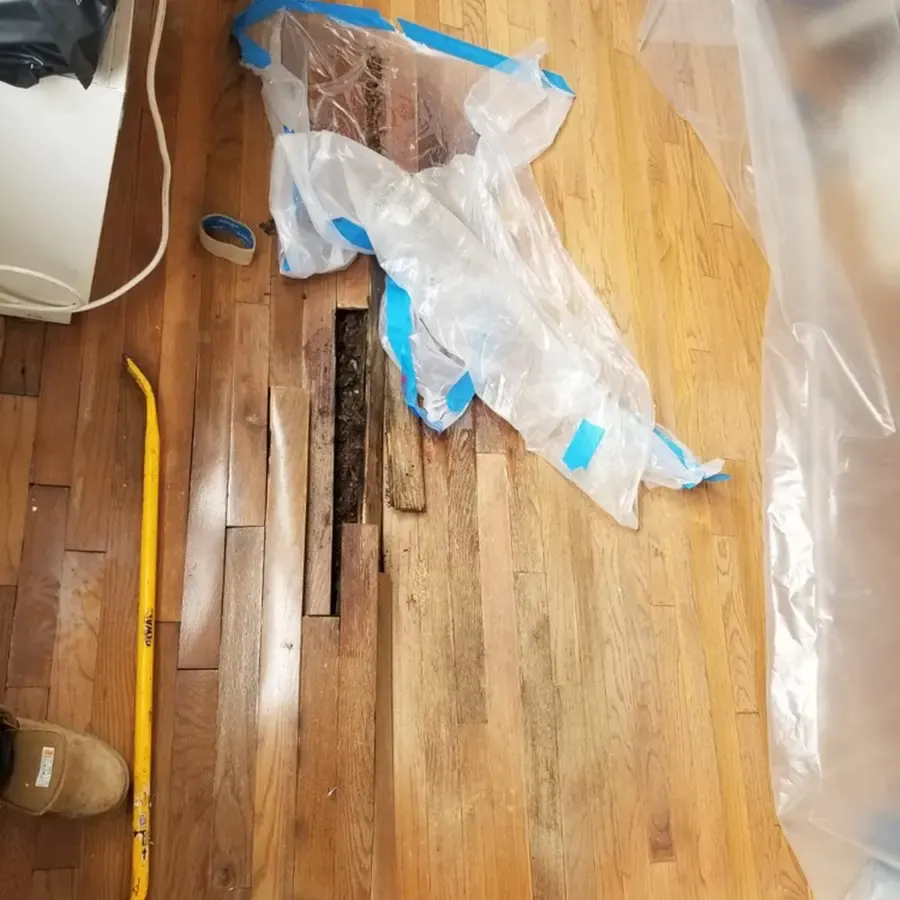
Structural drying is the work nobody sees, yet it decides whether stains come back, floors cup or dampness lingers out of sight. Where buildings share walls and have plaster and hardwood, water stays longer than it would in newer drywall construction.
- Moisture mapping comes before any equipment goes down.
- The water category and the class of loss set what is removed and what is dried.
- Equipment stays until readings sit within 2 to 4 points of a dry reference.
What does structural drying and dehumidification cost in Astoria, NY?
Expect $1,500 to $25,000 for structural drying in Astoria. The class of loss, the rooms and floors involved, dense plaster or hardwood and the number of equipment days the readings require all shape the price.
One or two rooms, light class
- Air movers and LGR units
- Readings every day
- Written drying log
A floor or cellar, Class 3
- Heavier equipment
- Cavity drying
- Floor drying mats
Class 4 or several floors
- Desiccant dehumidifiers
- Plaster and masonry drying
- Longer monitoring
Ranges are typical, not a quote: category of water, square footage, material class and how fast drying started move the number most. Run the water damage cost calculator for a closer range.
How structural drying and dehumidification is handled in Astoria
The tech who does the walkthrough maps moisture before any equipment goes down, so the drying plan matches what is actually wet. Equipment stays until the readings say dry, not until it looks dry.
- 1
Chart the moisture
Meters and a thermal camera mark the wet boundaries and set the class of loss.
- 2
Place the equipment
Air movers and dehumidifiers go in for each room's load.
- 3
Log every day
Humidity and material readings are recorded daily.
- 4
Verify dry
Equipment leaves when readings match the dry reference.
How the drying plan is built
The tech's walkthrough begins with moisture readings from pin and pinless meters plus thermal imaging, and the loss then receives a class from 1 to 4. The class sets equipment per room. Class 4 covers saturated dense material such as brick, plaster or hardwood and calls for specialty drying, and shared walls mean the neighbor's side is part of the plan.
- Air movers placed for each room's evaporation load.
- LGR dehumidifiers for most losses and desiccants for cool cellars and Class 4 materials.
- Drying mats for hardwood floors and cavity drying inside walls.
Readings decide when it is done
Every day the crew writes down temperature, humidity and the moisture content of marked materials; that psychrometric log becomes part of the claim file. Machines are pulled when wet materials sit within 2 to 4 points of a dry reference, measured on the same material somewhere the water never reached, and never simply because a certain number of days has passed.
- A dry reference reading from a room the water never touched.
- Marked points on walls and floors checked every day.
- Equipment adjusted as materials dry rather than left running unchanged.
Why dry on top is not dry
Painted surfaces and drywall faces dry quickly, yet the bottom plate, the subfloor and the back of old plaster can stay wet for much longer. Closing up early locks that moisture in. Drying follows water extraction, and the drying time estimator shows a typical schedule.
Structural drying and dehumidification across Astoria and nearby areas
The Astoria drying crew works across ZIP 11101, 11102, 11103, 11105 and 11106, including Ditmars-Steinway, Old Astoria, Ravenswood, Halletts Point and Astoria Heights.
The same service nearby: structural drying and dehumidification in East Elmhurst, Jackson Heights, Corona.
Water damage restoration in Astoria · every neighborhood covered
Related water damage services in Astoria
Structural Drying and Dehumidification questions in Astoria, NY
What does the IICRC S500 standard cover?
It sets out how professionals restore water-damaged buildings: mapping moisture, judging water category and class of loss, choosing equipment and deciding when drying is finished.
Why are dehumidifiers essential?
Fans move water from materials into the air, and dehumidifiers take it out of the air. Skip the dehumidifiers and the room only turns humid.
What is a desiccant dehumidifier?
Instead of a cold coil, it uses a moisture-absorbing material to pull water from the air. It suits cool cellars and dense Class 4 materials.
Is it fine to turn the equipment off overnight?
Better not. Drying slows when machines stop, which lengthens the job.
How long does structural drying take?
Plan on three to seven days, with plaster, brick and hardwood sometimes needing more.
What does 'dry reference' mean?
It is a number taken from the same kind of material in a spot the water never reached. Wet materials need to read within 2 to 4 points of it.
Wet walls and floors in Astoria? Dry them to a reading.
Equipment is chosen for the class of loss, and readings are logged every day until the goal is reached.