Dehumidification and Structural Drying in Corona, NY
Surfaces can feel dry within a day while brick, plaster and framing keep holding water. In Corona's shared-wall buildings and below-grade rooms, the drying team matches equipment to the loss and leaves it in place until the readings say dry.
(888) 527-9860Get the structure dried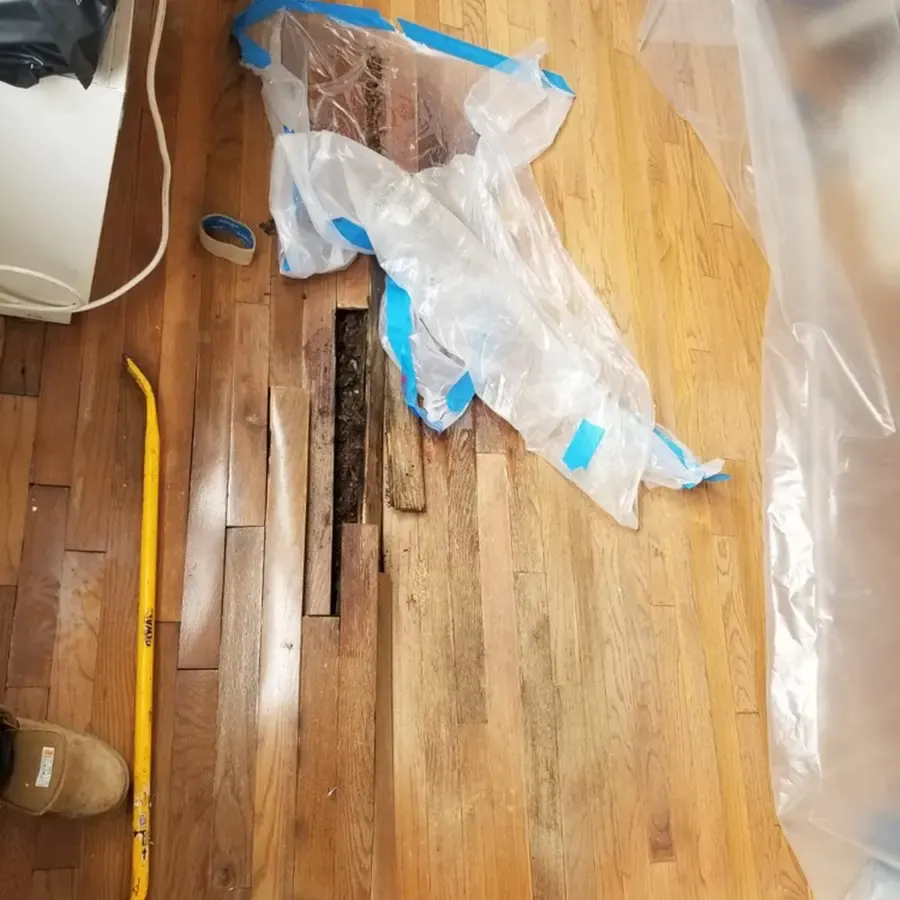
Most of a water loss happens where nobody looks: inside framing, plaster and subfloor. In Corona's shared-wall blocks and basement rooms, that hidden moisture decides whether a stain returns, a floor cups or dampness lingers. Drying the structure means finding that moisture and pulling it out.
- Moisture mapping comes before any equipment goes down.
- The water category and the class of loss set what is removed and what is dried.
- Equipment stays until readings sit within 2 to 4 points of a dry reference.
What does structural drying and dehumidification cost in Corona, NY?
Expect structural drying in Corona, NY to cost $1,500 to $25,000, depending on the class of loss, the rooms and floors affected, any brick or plaster involved and the days of equipment the readings demand.
One or two rooms
- Fans and LGR units
- Readings each visit
- Written drying record
Whole floor or basement, Class 3
- Extra equipment
- Wall cavity drying
- Drying mats on floors
Class 4 or multi-floor
- Desiccant machines
- Brick and plaster drying
- Longer monitoring
Ranges are typical, not a quote: category of water, square footage, material class and how fast drying started move the number most. Run the water damage cost calculator for a closer range.
How structural drying and dehumidification is handled in Corona
The tech who does the walkthrough maps moisture before any equipment goes down, so the drying plan matches what is actually wet. Equipment stays until the readings say dry, not until it looks dry.
- 1
Survey
Meters and thermal images mark the wet zone and set the class of loss.
- 2
Stage machines
Fans and dehumidifiers are set for each room's load.
- 3
Log it
Each day's temperature, humidity and material readings go on the record.
- 4
Prove dry
Machines go once materials match the reference.
Choosing equipment
Pin meters, pinless meters and a thermal camera outline the wet boundary, and the loss is then rated Class 1 through 4. The class sets how many machines each room gets. Class 4 means brick, plaster or hardwood are soaked deep, which calls for specialty drying.
- Fans matched to each room's size and load.
- LGR machines for ordinary losses and desiccant units for cool basements and Class 4 jobs.
- Mats and cavity systems for hardwood and wall interiors.
How the end is decided
On every visit the drying team notes temperature, humidity and material moisture in a psychrometric record that also backs up the claim. The target is a reading within 2 to 4 points of a dry reference taken in a part of the building the water never touched, so machines leave on measurements, not on a date.
- A reference reading from a room the water never reached.
- The same marked spots on walls and floors, read every visit.
- Equipment moved or removed as materials dry.
Why a dry surface can mislead
Paint and the face of drywall dry within hours, while bottom plates, subfloor and the backs of plaster keep their water. Painting or closing a wall too soon seals that moisture in. Pumping comes first, covered under water extraction; the drying time estimator puts a typical timeline on the rest.
Structural drying and dehumidification across Corona and nearby areas
Structural drying calls come from ZIP 11368, including shared-wall blocks in North Corona and South Corona, Corona Heights and the Corona Avenue area.
The same service nearby: structural drying and dehumidification in East Elmhurst, Jackson Heights, Flushing.
Water damage restoration in Corona · every neighborhood covered
Related water damage services in Corona
Structural Drying and Dehumidification questions in Corona, NY
Why does a dry-feeling room still need machines?
Surfaces feel dry long before framing, plaster and subfloor are. Equipment keeps working until meters in those materials match a dry reference.
Will the equipment raise the electric bill?
Yes, air movers and dehumidifiers draw power over several days. The drying log shows why they ran, which matters if the cost is part of the claim.
Why is the room so warm and loud?
Dehumidifiers give off heat and air movers make noise. That is normal, and it means moisture is being pulled out of the structure.
What is a Class 4 loss?
A loss where brick, plaster or hardwood are soaked deep and need specialty drying, often with desiccant units.
How many days will it take?
Typically three to seven days, with thick masonry and plaster adding more.
What counts as a dry reference?
A reading on the same material in a part of the building the water never touched. Wet materials are brought to within 2 to 4 points of it.
Damp walls and floors in Corona? Dry them until the meters agree.
The drying team matches machines to the class of loss and records readings each day until the target is reached.