Structural Drying and Dehumidification in Flushing, NY
Surface-dry is not dry. In Flushing's shared-wall co-ops and finished basements, moisture hides in brick, plaster and framing. The drying team sets a plan, logs readings daily and stops only when the materials match a dry reference.
(888) 527-9860Start drying the structure now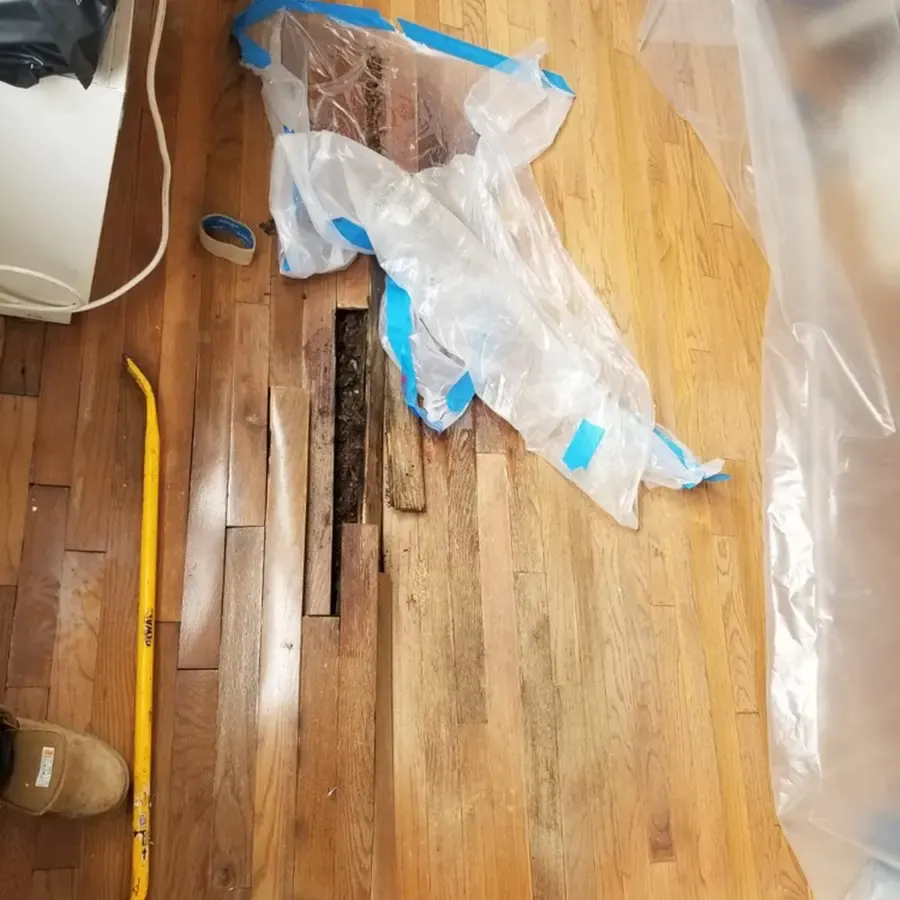
Structural drying is the long, quiet part of a water loss. After the water is out, the materials still hold moisture, and how that moisture leaves decides whether the building stays sound. Hardwood and plaster dry slowest.
- Moisture mapping comes before any equipment goes down.
- The water category and the class of loss set what is removed and what is dried.
- Equipment stays until readings sit within 2 to 4 points of a dry reference.
What does structural drying and dehumidification cost in Flushing, NY?
Structural drying in Flushing, NY typically costs $1,500 to $25,000. Equipment days, the class of loss, dense materials such as brick, plaster and hardwood, and the number of units involved set the figure.
One or two rooms, Class 1 or 2
- Air movers placed
- LGR dehumidifier
- Daily readings
Floor or basement, Class 3
- Wall cavity drying
- Desiccant units
- Moisture logs
Class 4 or multi-floor
- Dense material drying
- Several units checked
- Extended monitoring
Ranges are typical, not a quote: category of water, square footage, material class and how fast drying started move the number most. Run the water damage cost calculator for a closer range.
How structural drying and dehumidification is handled in Flushing
The tech who does the walkthrough maps moisture before any equipment goes down, so the drying plan matches what is actually wet. Equipment stays until the readings say dry, not until it looks dry.
- 1
Classify the loss
The crew sets the class and category and maps wet materials.
- 2
Place equipment
Air movers and dehumidifiers are sized to each room and material.
- 3
Monitor daily
Readings are logged and equipment is adjusted as the wet zone shrinks.
- 4
Confirm dry
Equipment comes out when materials match a dry reference.
How the drying plan is set
Flushing's six-story brick co-ops and older detached houses mean the plan must account for shared walls and finished basements. The tech classifies the loss, picks LGR dehumidifiers for ordinary rooms and desiccant units for dense materials, and places air movers by wall length and floor area. A co-op unit rarely dries alone, so neighboring units are checked.
- LGR dehumidifiers for ordinary rooms.
- Desiccant units for brick, plaster and hardwood.
- Air movers placed along walls and under cabinets.
Readings decide when it is done
Each day the drying team measures temperature, humidity and moisture in the materials, then adjusts the equipment. Drying ends when readings come within 2 to 4 points of a dry reference taken from unaffected material in the same building, not when the room feels dry.
- Daily psychrometric logs for the claim file.
- Equipment moved as the wet zone shrinks.
- Final readings recorded before anything leaves.
Why surface-dry is not dry
Paint and flooring can look dry while the plaster, studs and subfloor behind them still hold water. Closing them in invites swelling, staining and mold. The crew stays until the whole assembly reads dry. See water extraction for the step before and the drying time estimator for a rough timeline.
Structural drying and dehumidification across Flushing and nearby areas
The Flushing drying crew works ZIP 11354, 11355 and 11358, from co-ops in Linden Hill and Pomonok to houses in Murray Hill, Waldheim and Broadway-Flushing.
The same service nearby: structural drying and dehumidification in East Elmhurst, College Point, Corona.
Water damage restoration in Flushing · every neighborhood covered
Related water damage services in Flushing
Structural Drying and Dehumidification questions in Flushing, NY
How long does structural drying take?
Three to seven days is common. Brick, plaster, hardwood and finished basements run longer, and the readings, not a calendar, decide.
Why are so many machines needed?
Each room's class of loss sets the airflow and dehumidification, and dense materials need desiccant units to pull moisture out.
Can the machines be turned off at night?
They should run continuously. Stopping them lets moisture drift back into the materials and adds days.
What does 2 to 4 points of a dry reference mean?
The crew measures similar unaffected material in the building and dries the wet material until it reads within 2 to 4 points of that value.
Does a co-op unit dry alone?
Rarely. Water crosses shared walls and floors, so neighboring units are checked and dried too.
Is structural drying covered by insurance?
It is usually part of a covered water claim. What is covered depends on your own policy, so ask your insurer.
Water out but walls still damp? Start the dry-out now.
The drying team sets equipment to the class of loss and logs readings every day. Equipment stays until the structure reads dry.