Structural Drying and Dehumidification in College Point, NY
Dry to the touch is not dry. The drying team studies how much moisture sits in plaster, wood and masonry, sets air movers and dehumidifiers to match and does not pull equipment until the numbers say the building is back to normal.
(888) 527-9860Start drying the structure now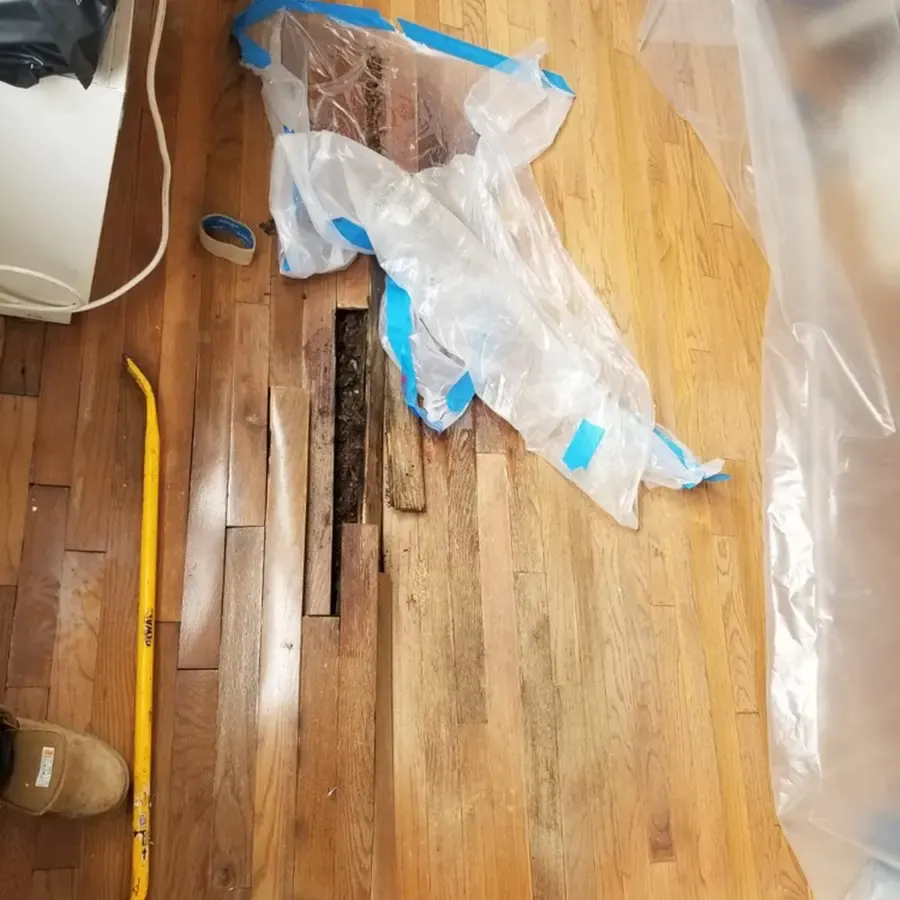
Old houses hold water stubbornly. Plaster, hardwood and thick framing soak it up slowly and give it back more slowly, and College Point has plenty of homes from the 1920s along with Cape Cod houses from 1953. Drying them properly is what keeps stains, cupped floors and musty smells from showing up weeks later.
- Moisture mapping comes before any equipment goes down.
- The water category and the class of loss set what is removed and what is dried.
- Equipment stays until readings sit within 2 to 4 points of a dry reference.
What does structural drying and dehumidification cost in College Point, NY?
Structural drying in College Point, NY generally costs $1,500 to $25,000. The class of loss, how many rooms and floors are wet, whether plaster or old hardwood is involved and how many days of equipment the readings require set the figure.
One or two rooms, light loss
- Air movers and dehumidifier
- Daily readings
- Written drying log
Whole floor or basement
- Added equipment
- Wall cavity drying
- Hardwood drying mats
Dense materials or several floors
- Desiccant units
- Plaster and masonry drying
- Longer monitoring
Ranges are typical, not a quote: category of water, square footage, material class and how fast drying started move the number most. Run the water damage cost calculator for a closer range.
How structural drying and dehumidification is handled in College Point
The tech who does the walkthrough maps moisture before any equipment goes down, so the drying plan matches what is actually wet. Equipment stays until the readings say dry, not until it looks dry.
- 1
Read the building
Meters and a thermal camera outline the wet area and set the class.
- 2
Deploy equipment
Air movers and dehumidifiers are placed to match each room's load.
- 3
Record daily
Temperature, humidity and moisture numbers go into the log.
- 4
Confirm and remove
Equipment goes once wet materials reach the dry sample.
Setting up the equipment
The first visit includes moisture readings with pin and pinless meters and a thermal camera. The crew then rates the loss from Class 1 to Class 4. A higher class means denser, wetter materials, and Class 4 jobs involving plaster or old hardwood call for specialty equipment.
- Air movers sized to how much water each room has to give up.
- LGR dehumidifiers for general work, desiccant units where it is cool or the materials are dense.
- Drying mats under hardwood and small openings to reach wall bays.
The daily record
Each visit adds temperature, humidity and material readings to a written psychrometric log, which later becomes part of the claim file. The crew compares wet materials with a dry sample of the same kind from a part of the building the water never reached, and equipment goes home only when the gap closes to a few points.
- A sample from a dry room sets the target.
- Marked spots on walls and floors are read each day.
- Settings change as materials dry; nothing runs on autopilot.
Why a dry-looking wall can still be wet
Paint and the face of drywall dry quickly, but the framing at the bottom of a wall and the back of plaster do not. Sealing or painting over them traps moisture. The pumping step comes first in water extraction, and the drying time estimator gives a rough timeline.
Structural drying and dehumidification across College Point and nearby areas
Crews work across ZIP 11356, including the Graham estate area, College Estates, Allied Homes, the Poppenhusen Institute area and the blocks along College Point Boulevard.
The same service nearby: structural drying and dehumidification in East Elmhurst, Flushing, Jackson Heights.
Water damage restoration in College Point · every neighborhood covered
Related water damage services in College Point
Structural Drying and Dehumidification questions in College Point, NY
Why does the crew follow a written standard?
IICRC S500 is the trade's written method for water damage work. It covers how moisture is mapped, how loss categories and classes are judged, what equipment is used and when a building counts as dry.
What do the dehumidifiers add?
Air movers coax water out of materials, but only dehumidifiers take it out of the air. Without them, moisture just circulates.
When is a desiccant unit used?
Where it is cool or the materials are dense. A desiccant machine pulls moisture with a drying material rather than a cold coil, so it keeps working in basements.
Why leave the equipment on overnight?
Drying slows or stalls when the machines stop, and the job stretches out.
How many days does structural drying usually need?
Three to seven is common; plaster, old hardwood and losses spread over several floors take longer.
What is the dry reference?
A reading taken from the same kind of material in a part of the building the water never touched. Wet materials are dried until they sit within 2 to 4 points of it.
Wet walls or floors? Dry them to a reading, not a guess.
The drying team matches equipment to the class of loss and records readings every visit until the goal is reached.