Water Extraction and Removal in College Point, NY
College Point is low ground beside Flushing Bay, and a failed pipe or heavy rain can leave inches of water on a floor. Truck-mounted extraction goes first, since each gallon removed is one the walls never absorb.
(888) 527-9860Get the water pulled out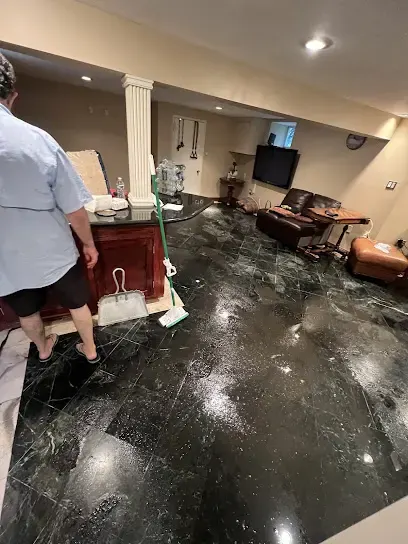
College Point is low ground between Flushing Bay and the East River, and part of it was once Mill Creek. Water here can arrive from the street or a yard before it ever touches a pipe, which is why removal comes ahead of every fan and dehumidifier.
- Moisture mapping comes before any equipment goes down.
- The water category and the class of loss set what is removed and what is dried.
- Equipment stays until readings sit within 2 to 4 points of a dry reference.
What does water extraction and removal cost in College Point, NY?
Expect water extraction in College Point, NY to cost between $800 and $15,000. The final figure follows the water category, the number of rooms and floors involved, the flooring underneath and how long the water sat.
Clean water, one room
- One truck-mounted pass
- Carpet pressed dry
- Starting moisture map
Basement or several rooms
- Pumps plus extractors
- Pad removed as needed
- Drying equipment placed
Deep or contaminated water
- Category 3 procedure
- Wet materials removed
- Containment set up
Ranges are typical, not a quote: category of water, square footage, material class and how fast drying started move the number most. Run the water damage cost calculator for a closer range.
How water extraction and removal is handled in College Point
The tech who does the walkthrough maps moisture before any equipment goes down, so the drying plan matches what is actually wet. Equipment stays until the readings say dry, not until it looks dry.
- 1
Source and category
The tech traces the water to its entry point, and rates it clean, gray or black.
- 2
Pull the water
Truck-mounted units, pumps and weighted tools clear floors, carpet and basement.
- 3
Cut out the lost material
Pad, baseboard or low drywall are removed when readings or the category demand it.
- 4
Start the dry-out
Fans and LGR dehumidifiers are staged room by room, and daily readings begin.
What an extraction visit involves
The crew starts by finding where the water came from and how clean it is. A split supply pipe leaves clean water; a floor drain or the street leaves contaminated water, and that decides what gets thrown away as well as pumped away.
- Truck-mounted units handle deep or widespread water, with the hose run in from the curb.
- Portable extractors cover upper floors and small rooms where a hose will not reach.
- Submersible pumps move basement water once it is more than a few inches deep.
What happens to flooring
On carpet, a weighted tool presses water out of the pad underneath, not only the surface. Clean-water pad may survive; pad that sewage or floodwater soaked is discarded. On hardwood, tile and vinyl, the crew works along seams and edges and confirms with meters, because moisture hides beneath a hard surface.
- Clean water, found quickly: carpet usually stays and is dried on the floor.
- Gray water: pad is lifted out, and the carpet is cleaned and treated.
- Black water: carpet and pad it reached are bagged and carried out.
When the pumping stops
A job moves on from extraction once no more water comes up, not once the floor looks dry. Air movers and dehumidifiers are then matched to the room and daily readings begin; see structural drying for that stage and basement flooding cleanup for below-grade rooms.
Linden Place was closed for years by flooding near the old Flushing Airport, so crews here plan for water arriving from outside as well as from pipes. The basement backup risk check is a quick way to size up a house.
Water extraction and removal across College Point and nearby areas
Crews work throughout ZIP 11356, including College Point Boulevard, the Whitestone Expressway edge, Linden Place, 14th Avenue and College Point Corporate Park.
The same service nearby: water extraction and removal in East Elmhurst, Flushing, Jackson Heights.
Water damage restoration in College Point · every neighborhood covered
Related water damage services in College Point
Water Extraction and Removal questions in College Point, NY
When does extraction need to begin?
The moment the source is stopped. Moisture climbs into plaster and drywall within hours, and mold can begin in a day or two, so water that leaves early means less material to replace.
Why not just use a shop vacuum?
It suits a small spill on a hard floor. It cannot squeeze a soaked pad or keep up with a flooded basement, and a truck-mounted unit moves far more water and vents it outdoors.
Can carpet be kept?
Often, when the water is clean and caught early. Gray water usually costs the pad, and anything sewage or floodwater soaked is removed.
How dangerous is the water?
It depends on where it came from. A broken supply pipe sends clean water, while a floor drain, toilet or the street sends Category 2 or 3 water that calls for protective gear.
Is the job finished once the water is out?
No. That removes only the standing water. Reaching the IICRC S500 goal takes several more days of air movers, dehumidifiers and daily readings.
Can extraction reach a warehouse floor?
Yes. Truck-mounted units run long hoses into large floors such as the warehouse bays in the southern industrial area, and the work is staged so the rest of the building can keep operating.
Water on the floor? Get it out before it sinks in.
Pumping comes first, then the drying team stages equipment so the building follows a measured target.