Water Extraction Flushing, NY: Pumping and Removal
Standing water in a Flushing building keeps soaking upward into plaster, drywall and subfloor. The extraction crew removes it first, using truck-mounted and portable pumps, so the drying that follows has far less to fight.
(888) 527-9860Get the water pumped out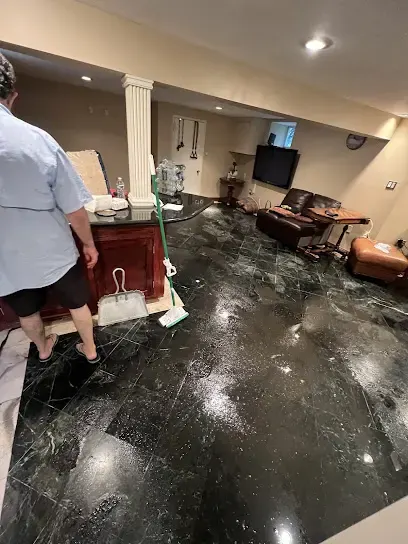
A Flushing water loss is decided by how quickly the water leaves. Water pulled out through a hose does not have to be coaxed from plaster and subfloor later, so the extraction crew starts before any air mover runs, in garages, cellars, co-op apartments and storefronts alike.
- Moisture mapping comes before any equipment goes down.
- The water category and the class of loss set what is removed and what is dried.
- Equipment stays until readings sit within 2 to 4 points of a dry reference.
What does water extraction and removal cost in Flushing, NY?
Water extraction in Flushing, NY usually costs $800 to $15,000. Where a job lands depends on the water category, how many rooms and floors are wet, the flooring and how long the water stood.
A single room, clean water
- Pump-out of the room
- Carpet pressed dry
- First moisture map
Basement or a few rooms
- Pumps and extractors
- Wet pad removed
- Equipment staged
Deep or contaminated flood
- Black-water protocol
- Affected materials removed
- Containment barriers
Ranges are typical, not a quote: category of water, square footage, material class and how fast drying started move the number most. Run the water damage cost calculator for a closer range.
How water extraction and removal is handled in Flushing
The tech who does the walkthrough maps moisture before any equipment goes down, so the drying plan matches what is actually wet. Equipment stays until the readings say dry, not until it looks dry.
- 1
Source and category
The tech finds the entry point, grades the water and lists the wet rooms and floors.
- 2
Water out
Truck units, submersible pumps and weighted tools take water from floors and carpet.
- 3
Remove what cannot dry
Pad, baseboard and lower drywall are cut out when readings or the water category require it.
- 4
Start the drying
Air movers and dehumidifiers go in, and the first readings are recorded.
Where Flushing extraction calls begin
Many calls begin with street water. On July 18, 2026, flash flooding put Flushing basements and garages under water, and residents reported clogged drains letting street water rise and back up. Other calls begin upstairs, with a split supply pipe or an overflowing fixture in a co-op unit. Before pumping, the tech decides the water category, since drain and storm water change what may stay.
- Truck-mounted units for deep water, venting waste outdoors.
- Submersible pumps where a basement or garage holds more than a few inches.
- Portable extractors with long hoses for upper floors beyond a truck's reach.
Soft and hard floors
On carpet, a weighted tool presses the pad so it releases water, not just the surface fibers. Pad soaked in clean water may stay, while pad touched by sewer or flood water leaves with the carpet above it. Hardwood, tile and vinyl are extracted along the seams and then metered, because water slips beneath them.
- Clean water removed within a day: carpet can often stay put and dry.
- Gray water: pad goes, and the carpet is cleaned and treated.
- Category 3 water: porous material it reached is bagged and hauled out.
Handing off to drying
The pumping is finished once the machines stop pulling water, whatever the surface looks like. Then the drying team picks air movers and dehumidifiers by the class of loss and starts daily readings. Structural drying explains that stage, while basement flooding cleanup deals with rooms below the street.
Water extraction and removal across Flushing and nearby areas
The Flushing extraction crew works across ZIP 11354, 11355 and 11358, from Downtown Flushing and Main Street out to Murray Hill, Queensboro Hill and Broadway-Flushing.
The same service nearby: water extraction and removal in East Elmhurst, College Point, Corona.
Water damage restoration in Flushing · every neighborhood covered
Related water damage services in Flushing
Water Extraction and Removal questions in Flushing, NY
When should pumping begin?
Once the source is off. Plaster and drywall pull water up within hours and fungal growth can begin in a day or two, so every hour of delay costs material.
Can a shop vacuum handle it?
Only for a small spill on a tile or vinyl floor. Carpet pad and a flooded basement hold far more water than a household vacuum can lift, which is why truck-mounted units are used.
Is the carpet a loss?
Not always. Clean water caught early often leaves carpet dryable in place. Gray water usually costs the pad, and sewer or flood water costs both.
Is the water safe to touch?
Not always. A supply pipe releases clean water at first, yet water rising from a floor drain, a toilet or the street is Category 2 or 3, so gloves, boots and a mask are the minimum.
Does extraction finish the job?
No. It removes free water only. Bringing the structure to a dry reading takes several more days of equipment and daily logs.
Can an upper floor be pumped?
Yes. Portable extractors and long hoses reach upper floors and co-op units where a truck cannot park.
Water on the floor? Pump it out before it climbs.
The extraction crew removes the water, and the drying team places equipment during the same visit.