Basement Flooding Cleanup in Flushing, NY
Basements and garages across Flushing sit under the street grade, and the Kissena Park area has flooded more than once. The crew pumps the water, cuts out whatever cannot recover and dries the remaining structure to a measured goal.
(888) 527-9860Get the basement pumped out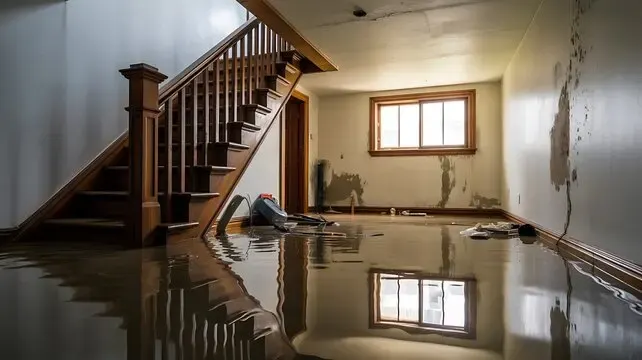
Many Flushing basements and garages hold laundry, storage and finished rooms below street grade, and the Kissena Park area keeps taking water. Areas around the park flooded in a May 2023 storm, and flash flooding hit the neighborhood again on July 18, 2026.
- Moisture mapping comes before any equipment goes down.
- The water category and the class of loss set what is removed and what is dried.
- Equipment stays until readings sit within 2 to 4 points of a dry reference.
What does basement flooding cleanup cost in Flushing, NY?
Cleaning up and drying a flooded Flushing basement usually costs $2,000 to $30,000. Sewage, finished space, deep water and long standing time push the total toward the top of that range.
Bare basement, clean water
- Submersible pumping
- Slab and wall drying
- Readings each day
Finished basement or garage room
- Soaked carpet torn out
- Wet drywall removed
- Dehumidifiers running
Sewage or deep flooding
- Black-water removal
- HEPA containment
- Extended drying
Ranges are typical, not a quote: category of water, square footage, material class and how fast drying started move the number most. Run the water damage cost calculator for a closer range.
How basement flooding cleanup is handled in Flushing
The tech who does the walkthrough maps moisture before any equipment goes down, so the drying plan matches what is actually wet. Equipment stays until the readings say dry, not until it looks dry.
- 1
Entry point and water grade
The crew traces how water got in and grades it as clean, gray or sewage.
- 2
Pump and extract
Submersible pumps and extractors clear the floor, the stairs and any carpet.
- 3
Tear out and sanitize
Finishes that cannot recover are removed, and the surfaces left behind are cleaned and treated.
- 4
Dry to the goal
Air movers and dehumidifiers run until concrete, block and framing match a dry sample.
Why Flushing basements flood
DEP says urbanization eliminated the wetlands that once surrounded Flushing Bay, so runoff now reaches the bay quickly. In January 2023 DEP named Kissena Park one of four initial cloudburst hubs, and by June 2023 it said a traditional sewer upgrade there would cost billions and take decades. After the July 2026 flood, residents reported street water backing up through toilets and bathtubs.
- Sewage pushed up through floor drains, toilets and tubs, covered under sewer backup cleanup.
- Street runoff pouring down garage ramps and stairwells.
- Water heaters and supply pipes that fail down below.
Pumping out and drying
Work begins with the entry point and the water grade. Carpet pad, lower drywall and insulation that gray or black water reached are torn out, while the surfaces that remain are sanitized. Foundation walls and slabs keep moisture for days, so dehumidifiers stay on until the meters agree with a dry sample.
- Drywall cut a set distance above the visible wet line.
- An EPA-registered antimicrobial on each surface that sewage touched.
- Wall and floor readings taken daily and saved for the adjuster.
Safety and the next storm
On September 2, 2021, three people were found dead in a basement apartment on Peck Avenue near Kissena Park after the Ida flooding, a sober reminder never to go down into rising water. For the future, DEP recommends sump pumps that discharge well clear of the foundation, and it notes backflow devices can help. A short basement backup risk check rates a building.
Basement flooding cleanup across Flushing and nearby areas
The Flushing basement crew covers ZIP 11354, 11355 and 11358, from the Kissena Park area and Queensboro Hill through Murray Hill and Downtown Flushing to Broadway-Flushing.
The same service nearby: basement flooding cleanup in East Elmhurst, College Point, Corona.
Water damage restoration in Flushing · every neighborhood covered
Related water damage services in Flushing
Basement Flooding Cleanup questions in Flushing, NY
Why do Flushing basements flood in heavy rain?
Most of the Flushing Bay area drains to combined sewers, and DEP says the city system typically takes about 1.75 inches of rain per hour. A heavier downpour fills the sewer and sends water up drains, while runoff pours in at doors and window wells.
Who looks after the sewer service pipe?
The property owner does, DEP says, from the building out to the sewer main under the street. For a cooperative that usually means the corporation, so a backup belongs on the agenda of the board and the super.
How long does a flooded basement take to dry?
Roughly four to seven days after the water and soaked finishes are gone. Slabs and block walls can stretch that.
Is basement flooding an insurance claim?
It turns on the source. Water backing up a drain often needs a sewer endorsement, while water from outside generally needs flood coverage. What is covered depends on your own policy, so ask your insurer.
Is a sewer backup worth reporting to the City?
Yes. DEP inspects within six hours of a 311 complaint, and a claim against the City goes to the NYC Comptroller within 90 days. Keep the complaint number and the photos.
What helps against the next flood?
DEP recommends sump pumps with discharge pipes that carry water well away from the building and says backflow devices can help. The City also handed out pumps to Flushing residents after the July 2026 flood.
Flooded basement in Flushing? Begin the dry-out tonight.
A basement left wet stays damp for weeks. Once the pumping ends, the drying team sets air movers and dehumidifiers.