Emergency Water Extraction in Corona, NY
Corona's dense blocks let standing water slip into shared walls and the rooms below within hours. The extraction crew removes it with truck-mounted machines first, leaving the drying phase far less moisture to chase.
(888) 527-9860Call for Corona water removal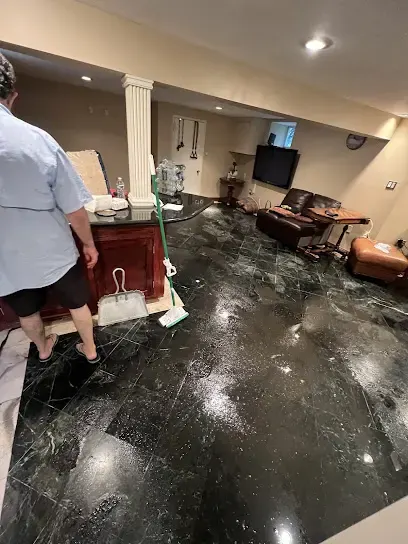
The size of a water loss is settled during extraction. Water that leaves through a hose never has to be dried out of plaster, which is why Corona's packed rows of two-family and multi-family buildings see the extraction crew work ahead of any drying machine.
- Moisture mapping comes before any equipment goes down.
- The water category and the class of loss set what is removed and what is dried.
- Equipment stays until readings sit within 2 to 4 points of a dry reference.
What does water extraction and removal cost in Corona, NY?
Water extraction in Corona, NY generally costs $800 to $15,000. Contaminated water, extra rooms and floors, delicate flooring and long standing time all push a job toward the high end.
One room, clean water
- Machine pass over floors
- Pad pressed dry
- First moisture map
Basement unit or several rooms
- Pumps plus extractors
- Wet pad removed
- Equipment staged
Deep or contaminated water
- Category 3 handling
- Ruined materials out
- Work area sealed
Ranges are typical, not a quote: category of water, square footage, material class and how fast drying started move the number most. Run the water damage cost calculator for a closer range.
How water extraction and removal is handled in Corona
The tech who does the walkthrough maps moisture before any equipment goes down, so the drying plan matches what is actually wet. Equipment stays until the readings say dry, not until it looks dry.
- 1
Survey and category
The tech tracks the source, rates the water and lists each wet room and floor.
- 2
Extraction
Truck-mounted machines, pumps and weighted wands pull water from floors and carpet.
- 3
Removal if needed
Pad, baseboard or lower drywall is cut out when readings or the category call for it.
- 4
Equipment goes in
Fans and LGR dehumidifiers start, and readings are recorded daily.
Where the water sits in Corona buildings
Many Corona basements are lived in, so plenty of calls begin in a below-grade bedroom, kitchen or bath. Others start upstairs when a supply pipe or an appliance fails and the water heads for the apartment underneath. Before choosing a method, the tech identifies the category, because sewage and storm water change what must be hauled out.
- Truck-mounted machines for deep or spread-out water, venting and dumping outside the building.
- Portable units and weighted wands for stairwells, upper floors and apartments beyond a truck's reach.
- Submersible pumps once a basement room holds several inches.
What happens to flooring
A weighted tool presses carpet so the pad releases its water as well as the top fibers. Pad from clean water may be kept; pad that met sewage or floodwater is discarded. On hardwood, tile and vinyl the crew extracts along the seams and checks with a meter, since water runs beneath hard floors and lingers.
- Carpet exposed to clean water for under a day often dries where it lies.
- With gray water the pad is pulled, and the carpet is cleaned and treated.
- With Category 3 water, any carpet and pad it reached are bagged and hauled out.
After the last of the water leaves
The pull-out phase ends once the machine stops drawing water, whatever the surface looks like. Next the drying team positions air movers and dehumidifiers to match the loss class and begins daily readings. Read more on structural drying or on basement flooding cleanup for below-grade rooms.
In a crowded Corona building, one wet floor can reach a neighbor's ceiling, so warning the unit below early can limit what spreads.
Water extraction and removal across Corona and nearby areas
The extraction crew handles ZIP 11368 calls, from North Corona and Corona Heights to the blocks around Roosevelt Avenue, 108th Street and Corona Avenue.
The same service nearby: water extraction and removal in East Elmhurst, Jackson Heights, Flushing.
Water damage restoration in Corona · every neighborhood covered
Related water damage services in Corona
Water Extraction and Removal questions in Corona, NY
How soon should extraction start?
Once the source is stopped. Moisture climbs into plaster and drywall within hours, and mold growth can begin inside 24 to 48 hours, so the sooner water leaves, the more material stays in place.
Is a wet vac enough?
A wet vac suits a small spill. It cannot squeeze water from pad or handle a flooded basement room. Truck-mounted machines move much more water and discharge it outdoors.
Can a basement apartment be dried out safely?
Usually, after the power question is settled. Pumps and extractors empty the room, and below-grade bedrooms and kitchens are dried to target readings before anyone moves back in.
Is standing water a health risk?
It depends on the category. Water from a supply pipe starts out clean, while water from a drain, a toilet or the street is Category 2 or 3 and calls for protective gear.
Is the job over once the water is out?
Not yet. Extraction takes out only the standing water, and the structure still needs several more days of fans, dehumidifiers and daily meter checks.
Can the crew reach an upper-floor apartment?
Yes. Portable extractors and long hoses are carried up stairs when a truck-mounted unit cannot park close enough.
Floor under water? Stay ahead of the spread.
The extraction crew pulls the water out, and the drying team sets equipment once the floor is clear.