Water Extraction and Removal in Jackson Heights, NY
In Jackson Heights one leak rarely stays in one apartment. The extraction crew pulls standing water out of floors and carpet before anything else, so less of it reaches the plaster, the parquet and the unit below.
(888) 527-9860Get the water pulled out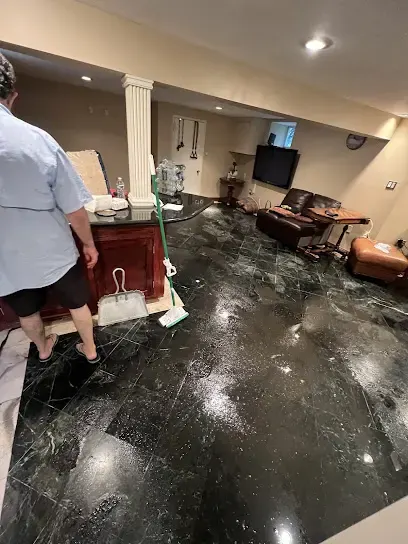
Jackson Heights was planned around apartment buildings with shared walls, and spilled water follows those walls. A kitchen leak can be in the ceiling below before the first call is made, which is why the extraction crew works before any drying equipment is switched on, whether the loss is in a cellar, a living room or a shop.
- Moisture mapping comes before any equipment goes down.
- The water category and the class of loss set what is removed and what is dried.
- Equipment stays until readings sit within 2 to 4 points of a dry reference.
What does water extraction and removal cost in Jackson Heights, NY?
In Jackson Heights, water extraction typically runs $800 to $15,000. The total follows the water category, the number of rooms and floors wet, the flooring and how long the water stood.
One room, clean water
- Truck-mounted pull
- Carpet pressed dry
- First moisture map
Cellar or several rooms
- Pumps and extractors
- Wet pad removed
- Drying gear set
Deep or dirty water
- Category 3 handling
- Materials cut out
- Containment
Ranges are typical, not a quote: category of water, square footage, material class and how fast drying started move the number most. Run the water damage cost calculator for a closer range.
How water extraction and removal is handled in Jackson Heights
The tech who does the walkthrough maps moisture before any equipment goes down, so the drying plan matches what is actually wet. Equipment stays until the readings say dry, not until it looks dry.
- 1
Walkthrough
The tech traces the source, sorts the water category and notes which units or floors share the wet area.
- 2
Pull the water
Truck-mounted units, pumps and weighted tools clear floors, carpet and cellar spaces.
- 3
Cut where needed
Wet pad, baseboard or lower plaster comes out only where readings or the category demand it.
- 4
Set the drying
Air movers and LGR dehumidifiers go in, and readings are logged every day.
Extraction across stacked apartments
More than 200 original Queensboro Corporation buildings still stand here, many of them garden apartments and co-ops, so the first stop is often the building super or the board. The tech finds the source, sorts the water category and notes which neighbors share the wall, floor or ceiling.
- Truck-mounted units for cellars and ground-floor spaces, with hoses run out to the street.
- Portable extractors for upper floors of walk-ups, which rise no higher than five floors.
- Submersible pumps when a cellar holds more than a few inches of water.
Parquet, carpet and old plaster
Early garden apartments had parquet floors, and parquet lifts when water sits beneath it. Extraction works along the seams and edges, and meters check the subfloor before anyone decides what stays. Pad that met only clean water can often dry in place, and it stays on the floor.
- Clean water caught early: parquet and carpet are often kept.
- Gray water: pad comes out, and carpet is cleaned and treated.
- Category 3 water: touched flooring is cut out and bagged.
When the water stops coming
Extraction is finished when the extractor stops pulling water, not when the surface looks dry. The drying team then sets air movers and LGR dehumidifiers and begins daily readings, so the building super and the neighbors can see the numbers fall. Structural drying covers that phase, and basement flooding cleanup covers cellars.
Water extraction and removal across Jackson Heights and nearby areas
The extraction crew works in ZIP 11372, 11370 and 11369, from the Historic District and 34th Avenue to apartments and shops along 82nd Street and Roosevelt Avenue.
The same service nearby: water extraction and removal in East Elmhurst, Corona, Astoria.
Water damage restoration in Jackson Heights · every neighborhood covered
Related water damage services in Jackson Heights
Water Extraction and Removal questions in Jackson Heights, NY
How fast does extraction need to start?
As soon as the source is stopped. Water climbs into plaster and subfloor within hours, so every hour it stays in the building puts more material at risk.
Is a wet-dry vacuum enough?
It handles a small spill on a hard floor. It cannot press water out of carpet pad or clear a flooded cellar, while truck-mounted units move far more water out of the building.
Will the neighbors below be affected?
Often, yes. In stacked apartments water crosses floors and shared walls, so the crew checks the unit below and the building super should be told right away.
Can parquet or carpet be saved?
Clean water caught early often lets both dry in place. Pad touched by gray water usually comes out, and anything soaked by sewer or flood water is removed.
Does extraction finish the job?
No. It removes the standing water only. Reaching the IICRC S500 goal takes several more days of air movers, dehumidifiers and daily readings.
Is extraction covered by insurance?
A sudden pipe or appliance failure is often covered, while a slow leak may not be. Coverage depends on your policy, so check with your own insurer.
Water on the floor? Get it out before it spreads down.
The extraction crew pulls water from floors and carpet, then the drying team sets equipment for the structure.