Burst Pipe Water Damage in Jackson Heights, NY
Pressure keeps a split pipe running until a valve is shut, and in a Jackson Heights apartment building the flow can reach several units. The response team removes the water, opens walls only where meters demand it and dries what remains.
(888) 527-9860Water pouring from a wall? Call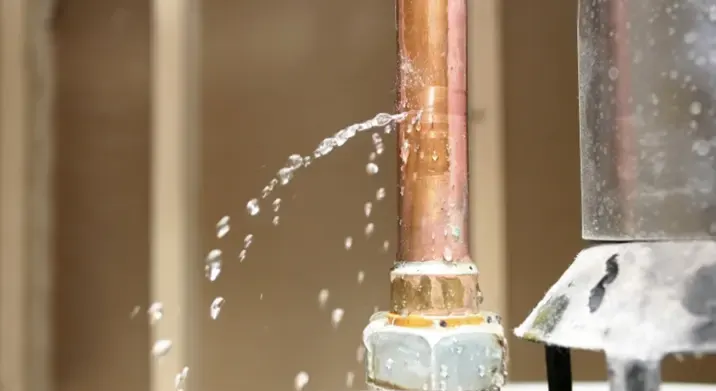
A pressurized pipe does not stop on its own. Inside a Jackson Heights apartment building, a failure on one floor can wet a riser wall that serves several units, so the first job is to learn where the water went.
- Moisture mapping comes before any equipment goes down.
- The water category and the class of loss set what is removed and what is dried.
- Equipment stays until readings sit within 2 to 4 points of a dry reference.
What does burst pipe water damage cost in Jackson Heights, NY?
A burst pipe in Jackson Heights typically costs $1,200 to $20,000 to clean up and dry. The final number depends on how long the pipe ran, how many floors got wet, the wall and floor materials and how fast drying began.
Stopped quickly, single room
- Water pulled out
- Dried without opening
- Readings each day
Wet walls and a floor beneath
- Small wall openings
- Ceiling beneath dried
- Parquet watched
Long run through several floors
- Plaster and drywall cut out
- Several floors dried
- Claim records
Ranges are typical, not a quote: category of water, square footage, material class and how fast drying started move the number most. Run the water damage cost calculator for a closer range.
How burst pipe water damage is handled in Jackson Heights
The tech who does the walkthrough maps moisture before any equipment goes down, so the drying plan matches what is actually wet. Equipment stays until the readings say dry, not until it looks dry.
- 1
Scan
Infrared and meters outline where the water traveled inside walls and floors.
- 2
Pull water
Standing water and wet carpet come out on every floor it reached.
- 3
Open sparingly
Only the cavities with high readings are cut open.
- 4
Dry and confirm
Equipment stays until readings reach the dry reference.
Where the older pipe fails
Prewar New York City apartment buildings commonly still carry original galvanized steel supply pipe and cast iron waste stacks. The steel corrodes from within, and the weak points are usually the threaded joints. A hard freeze adds load, as the cold wave of late January 2026 did when Central Park stayed below freezing for nine days in a row.
- Rusted joints buried in plaster walls.
- Worn shutoff valves and supply connectors beneath sinks.
- Fittings near outside walls in a deep cold snap.
Following water through shared walls
Paint hides a soaked wall for a long time. The tech scans floors and walls with an infrared camera and pinless meters, then cuts small drying holes low on the wall rather than stripping it. In a co-op the super or board is usually told, since a riser or a neighbor's unit may be involved.
- The path traced to the ceiling and floor beneath.
- Plaster over lath given more time than drywall.
- Parquet and hardwood checked for cupping each day.
Closing up only after dry
Rebuilding starts when readings show the wall is dry. Closing a damp wall traps moisture, and mold can start within 24 to 48 hours on wet material. For winter breaks read frozen pipe cleanup, for the equipment phase read structural drying, and for a stained ceiling below see ceiling leak water damage.
Burst pipe water damage across Jackson Heights and nearby areas
The response team works in ZIP 11372, 11370 and 11369, from apartment blocks along 34th Avenue and 37th Avenue to buildings near Roosevelt Avenue.
The same service nearby: burst pipe water damage in East Elmhurst, Corona, Astoria.
Water damage restoration in Jackson Heights · every neighborhood covered
Related water damage services in Jackson Heights
Burst Pipe Water Damage questions in Jackson Heights, NY
How much water does a split pipe put out?
A split supply pipe can release several gallons every minute, so an hour without a shut valve means hundreds of gallons moving through a building.
Does every wet wall get opened?
No. Meters decide. Many walls need only a few drying holes near the baseboard, particularly when clean water was caught early.
Will old plaster survive?
Often it does. Plaster over lath takes longer to dry than drywall, yet steady equipment and daily readings usually let it stay.
Will insurance pay for it?
Sudden and accidental discharge is commonly covered, while slow seepage over many months may not be. Coverage depends on your policy, so check with your own insurer.
How many days until it is dry?
Roughly three to five for clean water caught early. Plaster, parquet or damage across several floors adds days.
Does the restoration team fix the pipe?
No, a plumber does. The restoration team extracts water, dries the structure and keeps the moisture records.
Wet walls after a split pipe? Start drying before it drops a floor.
The response team removes the water, locates wet cavities with infrared scans and dries them until the readings agree.