Commercial Water Damage in Jackson Heights, NY
Every hour a shop stays closed costs money. Phased work and containment let as much of a Jackson Heights storefront or kitchen as possible keep trading while the wet areas recover.
(888) 527-9860Shop or kitchen flooded? Call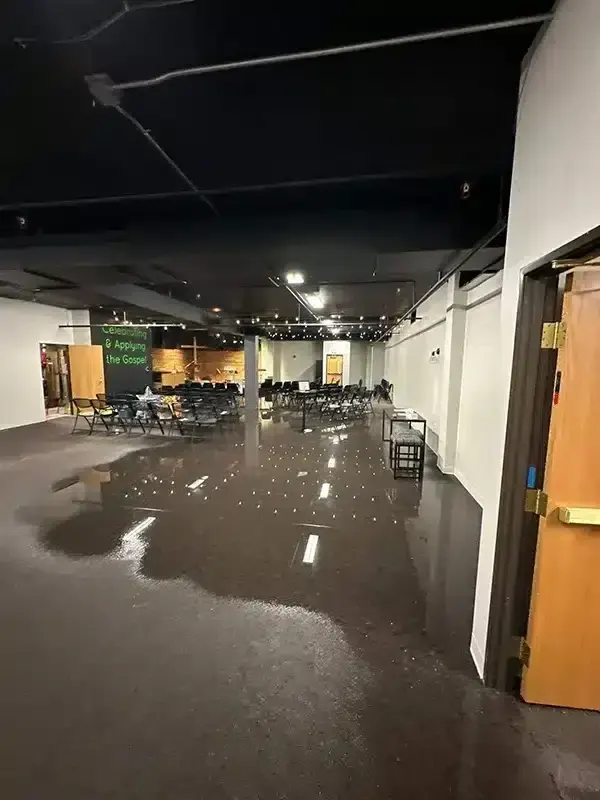
Shops fill 37th Avenue from 72nd Street to Junction Boulevard, with more on 73rd, 74th and 82nd Streets, and stores and food carts crowd Roosevelt Avenue. Many sit in mixed-use buildings, so water from a storefront can run up shared pipe chases into apartments above. Every unit it touched gets metered.
- Moisture mapping comes before any equipment goes down.
- The water category and the class of loss set what is removed and what is dried.
- Equipment stays until readings sit within 2 to 4 points of a dry reference.
What does commercial water damage cost in Jackson Heights, NY?
Commercial water damage in Jackson Heights usually lands between $3,000 and $100,000 or more. Floor area, the water category, the kind of building and the share of the space that has to keep operating while it dries set the total.
Small shop or office
- Water extracted
- Drying in stages
- Daily readings
Larger space or cellar
- Containment walls
- Stock relocated
- Desiccant dryers
Several floors or Category 3
- Full tear-out
- Work after closing
- Detailed claim file
Ranges are typical, not a quote: category of water, square footage, material class and how fast drying started move the number most. Run the water damage cost calculator for a closer range.
How commercial water damage is handled in Jackson Heights
The tech who does the walkthrough maps moisture before any equipment goes down, so the drying plan matches what is actually wet. Equipment stays until the readings say dry, not until it looks dry.
- 1
Assess and seal
The crew maps the wet areas and fences them off from the part still working.
- 2
Extract and protect
Water is pumped out as inventory is moved and logged.
- 3
Dry in phases
Equipment is staged room by room around trading hours.
- 4
Verify and return
Each area reopens once its readings show dry.
What goes wrong on the avenues
Restaurants and food service are among the area's largest employment sectors, and kitchens bring dishwashers, drains and heavy supply pipe. Retail strips such as Little India on 74th Street keep stock close to the floor, where water reaches it first.
- Supply pipe and sprinkler failures in shops and offices.
- Cellar flooding and sewer backups under storefronts.
- Roof or rooftop equipment leaks reaching top-floor spaces.
Staying open while the work goes on
Barriers around the wet zones let the rest of the shop, restaurant or office keep working, and drying moves one room at a time. Quieter units run in opening hours where possible, and the heavy machines wait until after closing. When sewage or flood water reached a kitchen or sales floor, that area is cleaned, treated and cleared before it reopens.
- Barriers between wet and working areas.
- Stock lifted, photographed and logged.
- Each day's readings go to the owner, the manager and the adjuster.
Paperwork for landlords, tenants and insurers
Landlords, tenants and more than one insurer often share a commercial loss, so moisture maps, daily logs and dated photos keep them all working from one record. For backups under storefronts read sewer backup cleanup, and for the drying phase read structural drying.
Commercial water damage across Jackson Heights and nearby areas
Commercial calls cover ZIP 11372, 11370 and 11369, from shops along 37th Avenue, 74th Street and 82nd Street to Roosevelt Avenue and Northern Boulevard.
The same service nearby: commercial water damage in East Elmhurst, Corona, Astoria.
Water damage restoration in Jackson Heights · every neighborhood covered
Related water damage services in Jackson Heights
Commercial Water Damage questions in Jackson Heights, NY
Can the business stay open during drying?
Often in part. Containment keeps the wet areas apart, and phased drying lets other rooms stay in use.
Who is called first?
Shut off the water, notify the building owner or manager and start extraction. Both the owner and the tenant usually need records.
What happens to wet stock?
Stock is moved, photographed and listed. Goods soaked by Category 3 water are usually thrown out, while the rest can often be cleaned and dried.
Is a commercial loss covered?
That turns on the property and business policies and on the cause. Coverage depends on your policy, so check with your own insurer.
How long does drying last?
Three to seven days for the drying itself, longer in large spaces or dense materials.
Can the crew work after hours?
Louder equipment can work overnight or on weekends, and quieter units are kept for opening hours.
Business flooded in Jackson Heights? Start extraction now.
The commercial crew fences off wet zones and dries in stages, which lets more of the space reopen sooner.