Flat Roof Leak Water Damage in Jackson Heights, NY
When a roof admits water, the top floor takes it first. In Jackson Heights the drying team removes wet insulation and dries the ceiling and upper walls, and a roofer fixes the source so the work holds.
(888) 527-9860Water through the roof? Call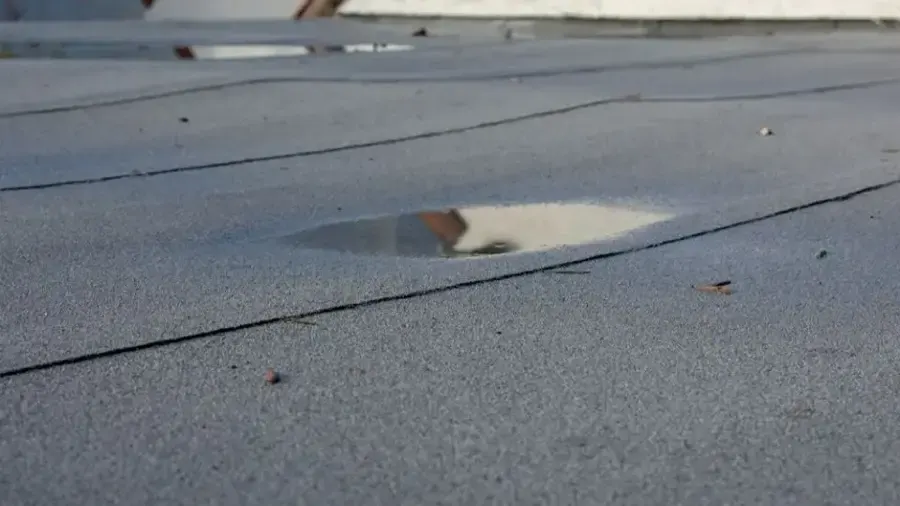
A roof leak in an older multi-story brick building shows up at the top. In a co-op the board or the owner usually arranges the roof repair, while the person under the stain deals with the wet ceiling, and both need the water out quickly. Rain sits on a flat or low-slope roof until the drain takes it, so one blocked drain or worn seam can wet the top-floor ceiling in a single storm.
- Moisture mapping comes before any equipment goes down.
- The water category and the class of loss set what is removed and what is dried.
- Equipment stays until readings sit within 2 to 4 points of a dry reference.
What does flat roof leak water damage cost in Jackson Heights, NY?
Inside a Jackson Heights top floor, roof leak damage typically costs $1,000 to $18,000 to dry out. The wet ceiling area, the insulation involved and the number of rooms reached set the range, and roof repair is billed separately.
A single ceiling patch
- Thermal scan
- Patch dried
- Daily numbers
Soaked insulation and ceiling
- Insulation pulled
- Plaster section cut
- Joists dried
Rooms across floors
- Wide tear-out
- Wall drying
- Claim records
Ranges are typical, not a quote: category of water, square footage, material class and how fast drying started move the number most. Run the water damage cost calculator for a closer range.
How flat roof leak water damage is handled in Jackson Heights
The tech who does the walkthrough maps moisture before any equipment goes down, so the drying plan matches what is actually wet. Equipment stays until the readings say dry, not until it looks dry.
- 1
Locate
A thermal scan from below traces the soaked ceiling and the cavity above it.
- 2
Protect and remove
Soaked insulation and saturated ceiling material are removed with care.
- 3
Dry
Air movers and dehumidifiers target the joists, the ceiling and the upper walls.
- 4
Confirm after the repair
The area is read again after the roof is sealed to prove it stays dry.
Where roofs fail
Pitched roofs shed rain, and flat ones keep it until a drain takes it away, which puts the pressure on drains, flashing, membrane seams and parapet walls. Slate and mansard roofs, like those on the Chateau on 34th Avenue, tend to leak at flashing and joints instead.
- Drains and scuppers choked with debris.
- Torn membrane, lifted seams and old patches that gave out.
- Cracked parapet caps and loose flashing.
What happens below the roof
Water from above reaches the insulation between the roof and the ceiling first. Insulation that has taken on water stays wet in place and presses moisture into the joists, so it is removed. A bulge is relieved first, then the saturated plaster or drywall is taken down. A roofer has to seal the source, or the drying will not last.
- A tarp or temporary cover placed while the roof is exposed.
- Soaked insulation stripped out of the cavity.
- Joists, the ceiling and the top of each wall dried and measured daily.
Care that prevents repeats
Keep roof drains and scuppers clear through the fall and after heavy storms, and book a membrane inspection now and then. In a co-op, tell the super or board about a stain early. If water reached the units below, see ceiling leak water damage and structural drying.
Flat roof leak water damage across Jackson Heights and nearby areas
Roof leak calls reach ZIP 11372, 11370 and 11369, including top-floor units in buildings around 34th Avenue, 82nd Street and Junction Boulevard.
The same service nearby: flat roof leak water damage in East Elmhurst, Corona, Astoria.
Water damage restoration in Jackson Heights · every neighborhood covered
Related water damage services in Jackson Heights
Flat Roof Leak Water Damage questions in Jackson Heights, NY
Why does it leak only in a downpour?
Light rain drains away, but a downpour outruns the drain, so water ponds high enough to reach seams and flashing that normally stay dry.
Must soaked roof insulation come out?
Almost always, because wet insulation stays wet and keeps feeding the joists and ceiling.
Can drying begin before the roof is repaired?
It can, but the next storm will bring the water back. A tarp or a finished repair is what lets the drying last.
Is a roof leak covered?
Sudden storm damage is often covered, while wear and skipped maintenance may not be. Coverage depends on your policy, so check with your own insurer.
How long until it is dry?
Three to six days is typical once wet insulation is out and the roof is sealed.
How regularly should a flat roof be inspected?
Drains need clearing each fall and after major storms, and a roofer should look at the membrane and flashing every few years.
Soaked top-floor ceiling? Pull the wet insulation and begin drying.
The drying team removes soaked insulation and ceiling material, then dries the top floor until the readings agree.