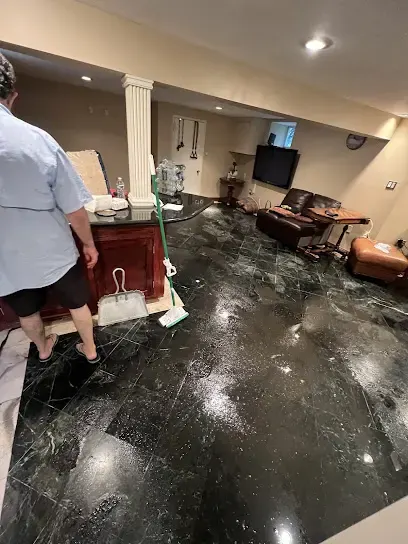
On Saturday, July 18, 2026, flash flooding put basements and garages in Flushing under water. The area around Kissena Park has seen this before, and the first day after a flood like that decides how much of the house can be saved.
Key takeaways
- Street water that enters a basement or garage is treated as contaminated, so pumping it out is only the first step.
- After the July 2026 flood the NYC Office of Emergency Management handed out pumps to Flushing residents, and a pump moves water but leaves wet walls, floors and belongings behind.
- DEP advises sump pumps with discharge pipes that carry water well away from the building, so it does not return.
- Photograph everything before it moves, and keep damaged items until the claim is settled.
- Drying equipment, not time, finishes the job: wet drywall, framing and concrete hold water long after the standing water is gone.
What happened in Flushing in July 2026
The July 18, 2026 flood put basements and garages in Flushing under water. Residents said clogged drains let street water rise and flow into homes, and the NYC Office of Emergency Management said the topography of the Flushing area is difficult to combat.
The Kissena Park area is the repeat trouble spot in Flushing. Hurricane Ida remnants flooded basement apartments there in 2021, and areas around Kissena Park flooded again in a storm in May 2023.
- Most of the water came from the street and the low ground, not from a broken pipe inside the house.
- Garages and basements sit lowest, so they fill first.
- Water that sits for days soaks into framing, stored belongings and insulation.
Why a pump alone is not enough
A pump removes the standing water, and that matters. But the water that has already soaked into concrete, drywall, wood and stored boxes stays behind.
That hidden moisture is why a floor can look dry and still feel damp, and why walls can darken and swell days later.
What a pump does well
- Lowers the depth of the water so rooms can be entered safely.
- Gives the crew a start on extraction.
- Buys time when the water is still rising.
What a pump leaves behind
A pump cannot reach water under carpet pad, inside wall cavities or in the pores of concrete. Truck-mounted extraction pulls water out of materials, and then dehumidifiers and air movers take out what is left in the air and the structure.
The first hours after street water enters
Safety comes before cleanup. Water in a basement or garage can touch electrical outlets, panels and appliances.
- Stay out of any room where water is near outlets, the panel or a running appliance.
- Do not walk through the water. Street flood water carries contamination from the roadway and the drains.
- Move people, pets and valuables to higher floors.
- Photograph the water depth, the damage and the items before they are moved.
- Open the garage door or basement bulkhead only if it is safe, to give a pump discharge hose a place to go.
How the water gets removed
Removal follows a set order. The crew pulls the bulk of the water first, then works on what is trapped in the structure.
Step one: bulk extraction
Powerful extraction units pull standing water off the floor. In a garage, water that has run under walls and into adjoining rooms is followed to where it went.
Step two: opening what is wet
Moisture meters show which walls and floors are holding water. Wet drywall and insulation are opened where the readings point, instead of tearing out whole rooms.
Step three: structural drying
Dehumidifiers and air movers run until the readings show the framing and slab are near a dry reference.
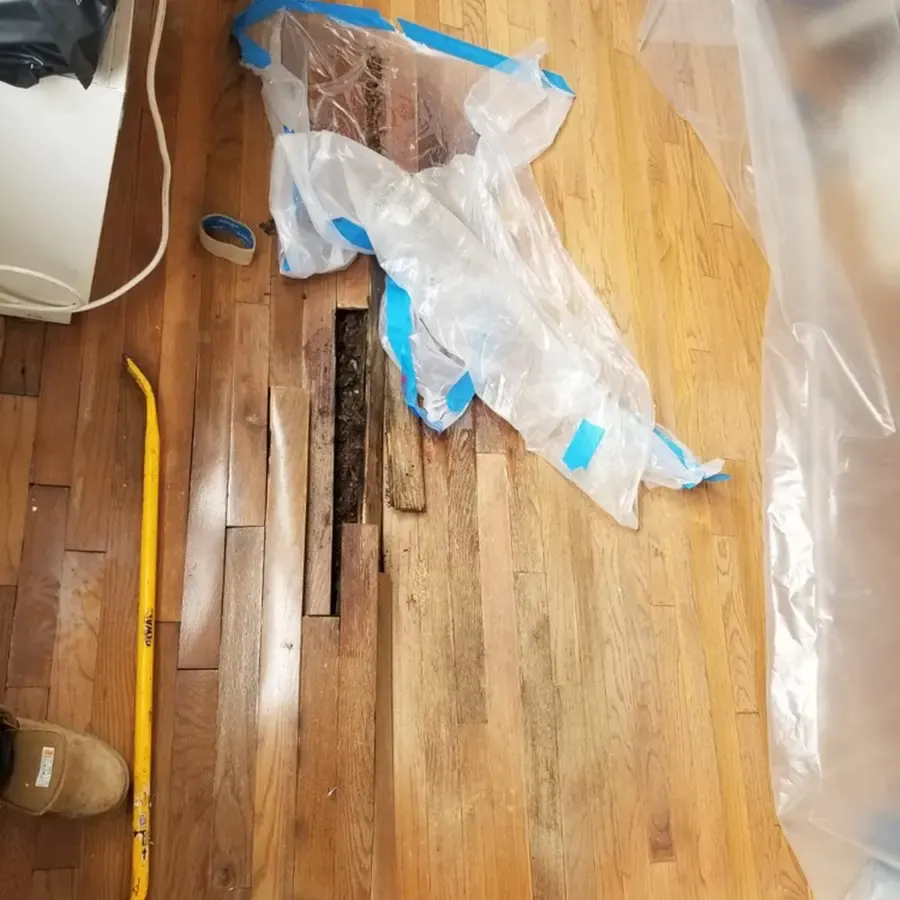
Where the water hides after a flash flood
Once the floor is clear, the water that remains is out of sight. It sits in places a quick look never reaches, and those places decide how long the drying takes.
Brick, plaster and concrete take longer to dry than drywall, and finished basements often combine all three.
- The bottom few inches of drywall and the insulation behind it.
- Carpet pad and the floor underneath it.
- Cabinets, shelving and stored cardboard along the walls.
- The slab itself, which holds moisture and gives it back slowly.
- Door frames and trim that wicked water upward.
Keeping water out of the next storm
DEP says the city sewer system typically handles about 1.75 inches of rain an hour, and Hurricane Ida remnants set a New York City record of 3.15 inches of rain in one hour on September 1, 2021. A storm beyond that rate sends water to the lowest spot, which in Flushing is often a basement or a garage.
DEP advises a sump pump with discharge pipes that carry water well away from the building. A plumber can say whether one fits a particular basement.
- Keep street drains and gutters near the house clear of leaves and trash.
- Test any sump pump before storm season.
- Raise stored items off the floor in garages and basements.
- Know where the electrical panel and main water shutoff are.
What to do with damaged belongings and the claim
Contaminated materials are removed, but the household still needs a record. Write down what was lost, and photograph each item before it goes.
Insurance coverage for flooding varies, so read the policy and ask what applies to flash flooding, storm water and sewer backup. Documentation of readings and the drying process supports the claim file.
- Keep a list of damaged items with approximate age and value.
- Save receipts for emergency work.
- Ask the restoration team for moisture readings and photos of the work.
Getting help in Flushing
A restoration team can handle extraction, removal and structural drying in one visit plan. For the town page, see water extraction in Flushing and basement flooding cleanup in Flushing.
The full list of neighborhoods is on the Flushing town page. The main service page is water extraction.
Questions
Is the water in my Flushing basement safe to touch?
Treat flood water from the street as contaminated. Avoid contact, wear boots and gloves if entry is necessary and keep the power off in wet areas until it is checked.
Can I use the pump I received after the July 2026 flood?
A pump helps lower the water, but it does not dry walls, floors or belongings. Follow the pump with extraction and structural drying.
How long does a flooded basement take to dry?
It depends on how long the water sat and what it soaked into. Moisture readings decide when drying is finished, not the calendar.
Will the water come back?
Not if the drain and discharge arrangement is right, but a storm beyond the sewer capacity can bring it back. DEP advises a sump pump with a discharge pipe that carries water well away from the building.
Should I clean up before taking photos?
No. Photograph first, then remove items. Photos of water depth, damage and belongings help with any claim.