Water Heater Leak Cleanup in Corona, NY
One failed tank can release dozens of gallons, and it keeps flowing until the cold supply is shut. Because many Corona basements double as living space, the response team clears the water and dries the rooms and walls around the heater.
(888) 527-9860Heater leaking? Call Corona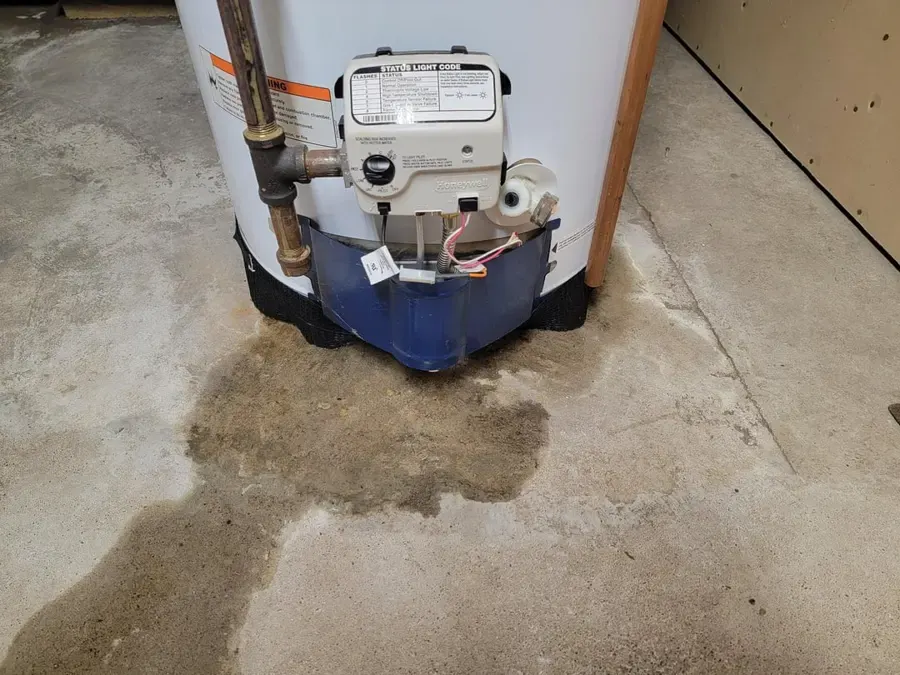
A water heater in a Corona basement may sit just a few steps from a bedroom, a kitchen or a laundry area, since many basements here are lived in. When the tank gives out, water spreads over the slab fast, then wicks into carpet and the bottom of the walls. A slow seep can do the same damage over weeks, unseen.
- Moisture mapping comes before any equipment goes down.
- The water category and the class of loss set what is removed and what is dried.
- Equipment stays until readings sit within 2 to 4 points of a dry reference.
What does water heater leak cleanup cost in Corona, NY?
Expect a water heater leak in Corona, NY to cost $1,000 to $14,000, with the gallons released, any finished room or basement apartment that got wet and the days the water sat setting the figure.
Utility corner only
- Pump-out and extraction
- Slab dried
- Readings recorded
Finished room next door
- Pad and carpet dried
- Wall bases metered
- Dehumidifiers placed
Basement apartment reached
- Floor coverings removed
- Flood cuts as needed
- Photos and readings filed
Ranges are typical, not a quote: category of water, square footage, material class and how fast drying started move the number most. Run the water damage cost calculator for a closer range.
How water heater leak cleanup is handled in Corona
The tech who does the walkthrough maps moisture before any equipment goes down, so the drying plan matches what is actually wet. Equipment stays until the readings say dry, not until it looks dry.
- 1
Confirm and map
The crew verifies the supply is shut and charts where the water went.
- 2
Extract
Floors and carpet are pumped and extracted.
- 3
Cut where wet
Baseboard and drywall are removed only where meters read wet.
- 4
Finish the job
Equipment stays until every material tests dry.
How a tank fails
Most tank heaters last about 8 to 12 years. Sediment and corrosion slowly thin the steel, so the end may be a pinhole weep or a rupture. Relief valves and supply connectors can fail too, and each sends water the same way.
- Rust holes in the tank bottom.
- A relief valve that opens and spills.
- Connectors that loosen or corrode at the top.
The dry-out around the tank
Water from the tank starts out as Category 1, so fast extraction often saves carpet, pad and wall bases. If it lingers for days on a grimy slab, it picks up contamination and the plan tightens. Meters check the wall bases beside the heater, since drywall draws water upward and framing soaks it in.
- Pumps and extractors clear the slab and carpet.
- Baseboards and low drywall opened only where meters read wet.
- Dehumidifiers chosen for the cool air of a basement.
After the replacement
A plumber sets the new tank. A drain pan and a leak alarm beside it give early warning next time. For larger floods see basement flooding cleanup, and water extraction explains the first step.
Water heater leak cleanup across Corona and nearby areas
The response team covers ZIP 11368 basements, from South Corona and Corona Heights to North Corona, near Corona Avenue and Junction Boulevard.
The same service nearby: water heater leak cleanup in East Elmhurst, Jackson Heights, Flushing.
Water damage restoration in Corona · every neighborhood covered
Related water damage services in Corona
Water Heater Leak Cleanup questions in Corona, NY
How old is too old for a tank heater?
Around 8 to 12 years is common, and sediment, hard use and corrosion can shorten that.
Is water from a tank clean?
It starts out as Category 1. If it lingers for days on a grimy slab, it can be reclassified as Category 2.
Will the basement carpet survive?
Often, if extraction and drying start inside a day or two. Pad is sometimes removed to speed things up.
Does insurance cover a heater leak?
Water damage from a sudden failure is commonly covered; the heater itself generally is not. What applies depends on the policy, which your own insurer can explain.
How long until the basement is dry?
A leak caught early typically dries in three to five days.
How can a repeat be caught early?
A drain pan, a leak alarm and a yearly look at the relief valve and tank all help.
Heater failed? Get the basement dried.
The response team pumps out the tank water and dries the basement slab and walls until the meters agree.